
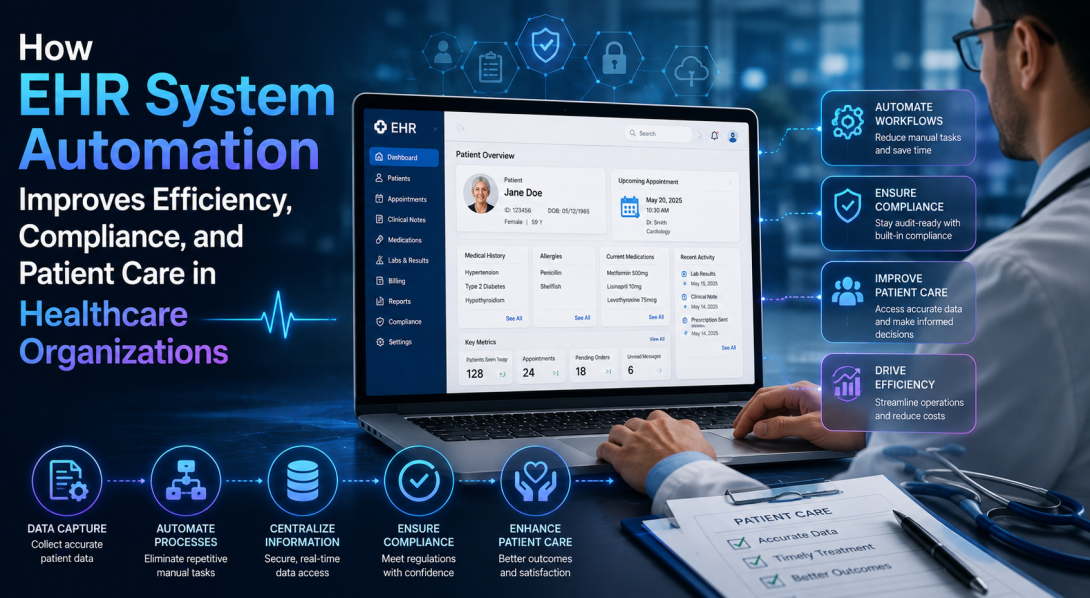
The healthcare industry is undergoing a rapid digital transformation, with organizations increasingly adopting advanced technologies to streamline operations and improve patient outcomes. Among the most impactful innovations is EHR system automation, which enables healthcare providers to automate routine tasks, enhance data accuracy, and improve regulatory compliance. As healthcare facilities manage growing volumes of patient data and administrative responsibilities, automated Electronic Health Record (EHR) systems have become essential for delivering efficient and high-quality care.
This article explores how EHR automation is transforming healthcare operations, improving compliance, and supporting better patient experiences.
What Is EHR System Automation?
EHR system automation refers to the use of technology, artificial intelligence, and workflow automation tools to streamline processes within electronic health record platforms. Rather than relying on manual data entry and administrative procedures, healthcare organizations can automate repetitive tasks such as patient documentation, appointment scheduling, billing, compliance reporting, and clinical workflows.
Electronic health record automation helps healthcare providers reduce administrative burdens while ensuring patient information remains accurate, accessible, and secure. These systems integrate various healthcare functions into a unified digital platform, improving communication across departments and enhancing overall operational performance.
Modern automated EHR systems often incorporate artificial intelligence, machine learning, and analytics capabilities to further optimize healthcare processes and decision-making.
Why Healthcare Organizations Are Adopting EHR Automation
Healthcare organizations face increasing pressure to improve efficiency while maintaining high standards of patient care and regulatory compliance. Traditional manual processes often create bottlenecks, increase the risk of human error, and consume valuable staff time.
Several factors are driving the adoption of healthcare workflow automation and EHR technologies:
Growing Administrative Workloads
Healthcare professionals spend significant time on documentation, data management, and reporting. Automation reduces the burden of routine administrative tasks, allowing providers to focus more on patient care.
Regulatory Compliance Requirements
Healthcare organizations must comply with strict regulations, including HIPAA and other data privacy standards. Healthcare compliance automation helps ensure documentation, reporting, and data handling processes consistently meet regulatory requirements.
Demand for Better Patient Experiences
Patients increasingly expect faster service, accurate records, and seamless communication. Patient care automation supports these expectations by improving appointment management, documentation accuracy, and care coordination.
Need for Operational Efficiency
Healthcare leaders are seeking healthcare efficiency solutions that reduce costs while improving service quality. EHR automation helps eliminate inefficiencies across administrative and clinical operations.
How EHR System Automation Improves Operational Efficiency
One of the primary benefits of EHR system automation is its ability to significantly improve operational efficiency throughout healthcare organizations.
Streamlined Patient Documentation
Manual documentation is often time-consuming and prone to errors. Automated patient documentation tools can capture clinical notes, update records in real time, and reduce redundant data entry. This enables healthcare providers to spend more time interacting with patients rather than completing paperwork.
Faster Administrative Processes
Tasks such as appointment scheduling, patient registration, billing, and insurance verification can be automated using healthcare process automation tools. This reduces delays and improves staff productivity.
Improved Healthcare Data Management
Effective healthcare data management is critical for patient safety and organizational performance. Automated EHR systems help maintain accurate, centralized patient records while minimizing duplication and inconsistencies.
Enhanced Clinical Workflow Automation
Clinical workflow automation enables healthcare providers to automate care pathways, prescription management, test ordering, and follow-up procedures. This improves coordination among medical teams and ensures timely patient care.
Better Resource Allocation
Automation provides healthcare administrators with greater visibility into operations, helping them allocate staff, equipment, and resources more effectively. This contributes to improved healthcare operations efficiency and reduced operational costs.
Key Features of Modern EHR Automation Solutions
Today's EHR software solutions offer a wide range of automation capabilities designed to support healthcare providers and administrators.
Intelligent Workflow Automation
Advanced systems automate routine tasks across clinical and administrative departments, improving consistency and reducing manual effort.
EHR Integration Capabilities
Effective EHR integration connects electronic health records with billing systems, laboratory platforms, pharmacies, telehealth applications, and other healthcare technologies. Integrated systems enable seamless data sharing and improve care coordination.
AI-Powered Decision Support
The growing role of AI in EHR Systems allows healthcare organizations to leverage predictive analytics, clinical recommendations, and automated alerts. AI-powered features can help identify risks, improve diagnoses, and support evidence-based treatment decisions.
Automated Compliance Monitoring
HIPAA compliance automation tools continuously monitor data access, security controls, and documentation practices to help organizations maintain compliance and reduce legal risks.
Reporting and Analytics
Automated reporting features provide real-time insights into patient outcomes, operational performance, financial metrics, and compliance status. These insights support data-driven decision-making.
Secure Data Management
Modern automated EHR platforms include robust security measures such as encryption, access controls, audit trails, and automated backup processes to protect sensitive healthcare information.
Common Challenges in Implementing EHR Automation
While the benefits are substantial, healthcare organizations may encounter several challenges when implementing EHR automation solutions.
Initial Implementation Costs
Deploying advanced automation technologies often requires significant investment in software, infrastructure, training, and system integration.
Staff Training and Adoption
Successful implementation depends on user adoption. Healthcare staff may require comprehensive training to effectively utilize new automation tools and workflows.
Data Migration Complexities
Transferring patient records from legacy systems to modern automated platforms can be complex and time-consuming. Proper planning and validation are essential to ensure data accuracy.
Integration Issues
Organizations often use multiple healthcare technologies that must work together seamlessly. Achieving successful EHR integration can present technical challenges if systems lack compatibility.
Cybersecurity Concerns
As healthcare becomes increasingly digital, organizations must strengthen cybersecurity measures to protect patient data and maintain regulatory compliance.
Future Trends in EHR System Automation
The future of EHR system automation is closely tied to ongoing advancements in artificial intelligence, machine learning, and digital healthcare technologies.
Greater Use of Artificial Intelligence
AI-driven automation will continue expanding across healthcare environments, supporting predictive analytics, automated documentation, clinical decision support, and population health management.
Voice-Enabled Documentation
Voice recognition technologies will further simplify medical records automation, enabling providers to document patient encounters more efficiently.
Enhanced Interoperability
Future automation solutions will focus on improving interoperability between healthcare systems, creating more connected and comprehensive patient records.
Personalized Patient Care
Advanced automation and analytics will support more personalized treatment plans, improving patient outcomes and engagement.
Expansion of Digital Healthcare Transformation
As organizations continue embracing digital healthcare transformation, automation will become a foundational component of healthcare delivery, administration, and compliance management.
Conclusion
EHR system automation is revolutionizing healthcare by streamlining workflows, reducing administrative burdens, improving compliance, and enhancing patient care. Through Electronic Health Record automation, healthcare organizations can achieve greater operational efficiency while maintaining accurate and secure patient data.
As technologies such as artificial intelligence, workflow automation, and advanced analytics continue to evolve, automated EHR systems will play an increasingly important role in shaping the future of healthcare. Organizations that invest in healthcare IT automation, clinical workflow automation, and integrated EHR solutions will be better positioned to improve outcomes, reduce costs, and deliver exceptional patient experiences in an increasingly complex healthcare environment.