
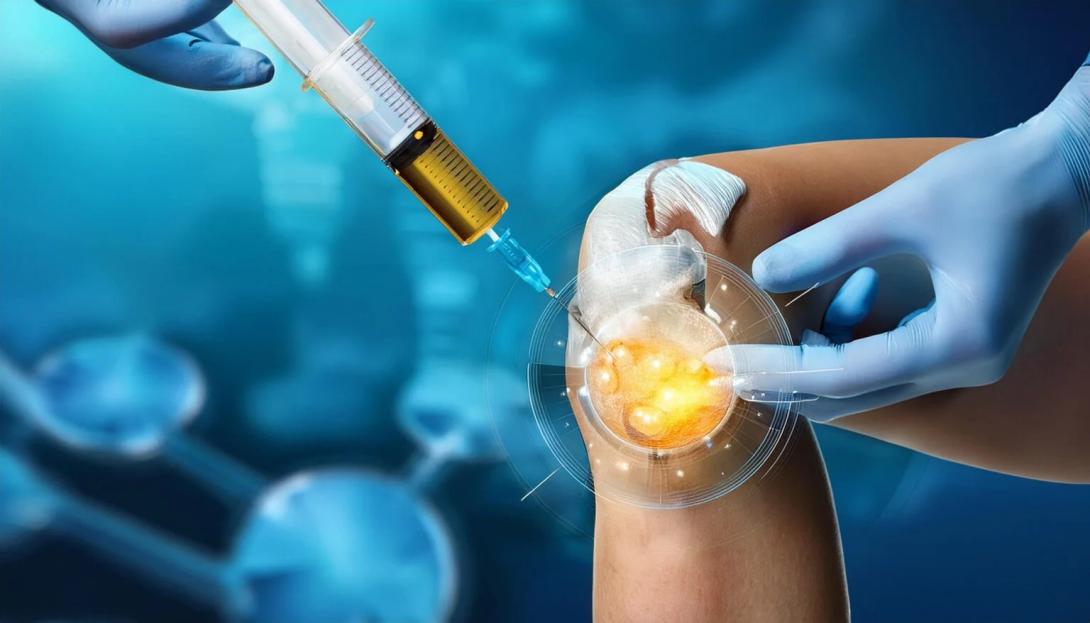
Knee osteoarthritis affects millions of adults, and many of them reach a point where anti-inflammatory medication and physical therapy stop producing change. Platelet-rich plasma has become one of the treatments people researches at that stage, which raises a practical question: who actually provides it, and what distinguishes one provider from another?
What varies between providers is rarely the injection itself. It is who performs it, whether imaging guides the placement, how candidacy gets decided, and what happens in the months afterward. Those differences are worth understanding before comparing prices.
This list covers seven practices and programs that provide PRP for knee pain, drawn from independent specialty practices, multi-site groups, and academic medical centers. Each entry is described on its own terms, because these organizations serve different patients under different circumstances and a numbered position says nothing about quality.
1. Performance Sports and Spine
Performance Sports and Spine is a physician-led practice operating at four California locations: Marina del Rey, Tarzana, Valencia, and Santa Barbara, under Dr. Raj Desai, who is double board-certified in Physical Medicine & Rehabilitation and Pain Medicine. His background includes clinical research in knee osteoarthritis at the Rutgers-Kessler Institute for Rehabilitation and authorship on published work examining platelet-rich plasma in knee osteoarthritis specifically.
The practice pairs regenerative treatment with rehabilitation rather than treating injection as a standalone event, working from the principle that movement is medicine. Alongside regenerative medicine, the practice performs interventional procedures including radiofrequency ablation, nerve blocks, and spinal cord stimulation, so patients whose knees are not appropriate candidates for regenerative treatment have other pathways available.
2. New Jersey Regenerative Institute
New Jersey Regenerative Institute is an independent practice focused on non-surgical orthopedic and regenerative treatment. It has participated as a clinical trial site in research on adipose-derived cell therapy for knee osteoarthritis, which places it among the smaller practices contributing to the evidence base rather than only applying it.
For patients who want a practice engaged in formal research while remaining independent of a hospital system, that trial participation is a meaningful data point to ask about during a consultation.
3. Regenerative Orthopedics and Sports Medicine
Regenerative Orthopedics and Sports Medicine operates across the Washington, DC region and centers its practice on image-guided orthobiologic treatment. The group publishes the clinical literature behind its treatment approaches on its own site, including randomized controlled trial data, which gives prospective patients an unusual amount of visibility into the reasoning behind a recommendation.
The practice has also served as a clinical trial site for knee osteoarthritis research.

4. RegenCore Method
RegenCore Method is a physician-led regenerative orthopedics group with clinics in San Francisco and Palo Alto, combining orthobiologics with advanced imaging to help patients recover without surgery. Its fellowship-trained, board-certified physicians use ultrasound- and fluoroscopy-guided placement across regenerative orthopedics, sports medicine, and pain.
The practice emphasizes precise, image-guided delivery and identifying the source of joint, tendon, or disc pain before treating it. Patients considering this route should confirm which conditions the clinic treats and ask how candidacy is assessed, since not every joint is suited to regenerative treatment.

5. OrthoCarolina
OrthoCarolina is a large orthopedic group whose research arm has participated in clinical trials on cell therapy for knee osteoarthritis. Groups of this size typically house surgical and non-surgical care under one roof, which suits patients who want a single organization managing the full range of knee treatment.
That structure matters for anyone whose knee may eventually require surgical evaluation, since the handoff happens internally rather than through an outside referral. It also means a patient can be assessed for regenerative treatment and for joint replacement by clinicians who share the same records.

6. Hospital for Special Surgery
The HSS Center for Regenerative Medicine brings physicians, surgeons, and scientists together around orthobiologic treatment, and it runs active clinical trials examining platelet-rich plasma and related therapies. Its published position is that clinical use of regenerative treatment should follow current medical evidence and rigorous outcomes data.
Patients drawn to institutional research infrastructure, or those who want to ask about trial eligibility, will find that structure here. Trial participation is not appropriate for everyone, and eligibility criteria are usually specific about arthritis stage and prior treatment.

7. Stanford Health Care
Stanford's orthopedic program includes work led by Dr. Constance Chu, whose federally funded research examines platelet-rich plasma for early knee osteoarthritis through a biorepository-linked registry that stores PRP for knee pain samples for later comparison against patient outcomes.
That registry model has been adopted at other academic centers. For patients specifically interested in early-stage knee osteoarthritis, and in the open research question of which patients benefit from platelet-rich plasma at all, this program sits close to the source of the evidence.

Before You Choose
Candidacy for regenerative treatment depends on the stage of arthritis, the condition of the joint, and what has already been tried. No list can establish whether a particular knee is an appropriate target. That determination comes from a physical examination and imaging review with a qualified physician who has assessed your individual situation.