
Sciatica can turn simple daily activities into frustrating challenges. Sitting at a desk, getting out of bed, walking around the house, or bending down can suddenly feel uncomfortable. For some people, the fear of making the pain worse becomes almost as stressful as the pain itself.
The good news is that sciatica does not always require aggressive treatment. Many people improve with conservative care, movement, exercise, and a treatment plan that matches their needs. Sciatica often involves irritation or compression of nerves in the lower back, and symptoms may travel through the buttock and down the leg.
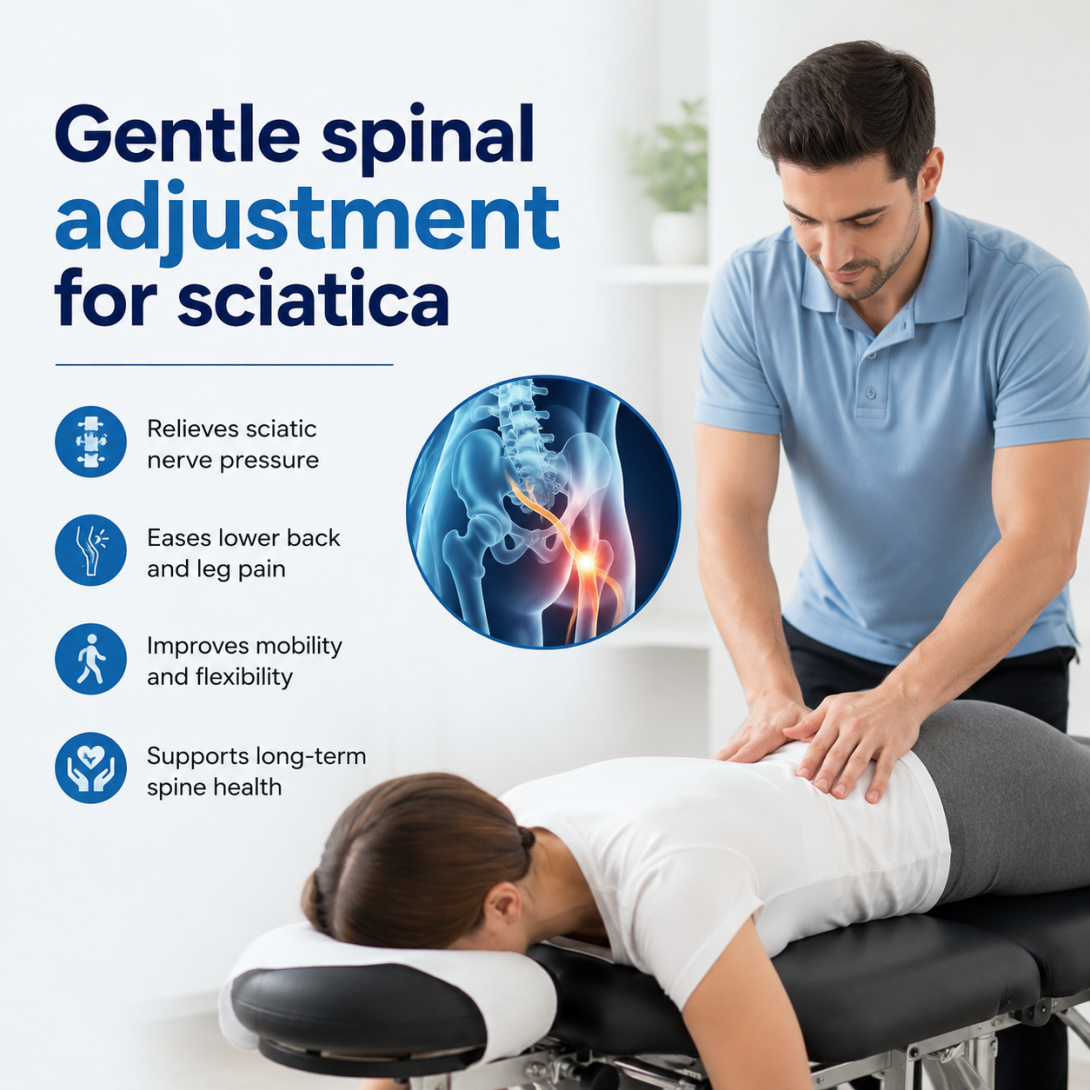
One approach that often gets attention is a gentle spinal adjustment. The idea is simple: support better movement while avoiding unnecessary force. The goal should not be to “push through” pain. Instead, care should be comfortable, controlled, and based on an individual assessment.
What Makes Sciatica Feel So Uncomfortable?
Sciatica is not simply ordinary back pain. It usually involves symptoms along the path of the sciatic nerve, which runs from the lower back through the buttock and down the leg.
A person may notice different sensations depending on what is irritating the nerve. Symptoms can range from mild discomfort to sharp or burning pain. Tingling, numbness, and weakness can also occur.
Common symptoms may include:
- Pain that travels from the lower back into the buttock
- Discomfort that moves down one leg
- Tingling or a pins-and-needles feeling
- Numbness in part of the leg or foot
- Muscle weakness in more serious cases
- Pain that becomes worse after long periods of sitting
- Increased discomfort with coughing or sneezing
Understanding these symptoms can make treatment feel less frightening. Instead of guessing what the pain means, people can work with a qualified healthcare professional to understand what may be happening and what type of care is appropriate.
Why Gentle Care Can Feel More Comfortable
When people hear the word “adjustment,” they may imagine a strong movement or sudden twist. Modern chiropractic care can include different techniques, and treatment does not have to feel forceful.
Gentle spinal adjustment for sciatica focuses on controlled movements that are chosen according to a person's symptoms, comfort, mobility, and overall condition. A practitioner may first assess posture, movement, and areas of stiffness before deciding what technique is suitable.
A thoughtful approach can help patients feel more involved in their care. Instead of treating everyone the same way, the treatment plan can be adjusted according to how the person responds.
What a Gentle Approach May Focus On
- Comfortable and controlled movement
- Improving restricted spinal motion
- Supporting normal movement patterns
- Reducing unnecessary strain during daily activities
- Combining hands-on care with exercises
- Monitoring changes in pain and mobility
- Adjusting care when symptoms change
The purpose is not to promise an instant cure. Good care should focus on realistic progress and long-term function.
Spinal Adjustment Is Not the Whole Treatment Plan
One of the biggest misunderstandings about sciatica is that one treatment should solve everything. In reality, recovery may involve several parts. Guidelines from NICE recommend considering manual therapy, including spinal manipulation or mobilisation, as part of a broader treatment package that includes exercise.
That means a person may benefit from a combination of professional care, movement, strengthening, and practical changes at home.
A complete plan may include:
- Gentle hands-on treatment when appropriate
- Stretching based on individual needs
- Strength exercises for supporting muscles
- Posture and movement education
- Advice about daily activities
- Gradual return to normal activity
- Regular progress checks
This approach can also give people something important: confidence. When patients understand what they can safely do, they may become less afraid of movement.
Keep Moving, But Listen to Your Body
When pain appears, staying in bed all day can seem like the safest choice. However, prolonged inactivity may not be helpful. Mayo Clinic notes that too much inactivity can make symptoms worse, while appropriate activity may support recovery.
Movement does not mean ignoring pain or forcing your body through severe symptoms. It means finding activities you can tolerate and increasing them gradually.
Simple daily habits can make a difference:
- Take short walking breaks instead of sitting for hours.
- Change positions regularly.
- Avoid movements that clearly increase your symptoms.
- Use good support when sitting for long periods.
- Follow exercises recommended by a qualified professional.
- Increase activity slowly as your comfort improves.
Small changes are often easier to maintain than a complete lifestyle overhaul.
Choosing the Right Provider Matters
Not every case of leg or back pain is the same. That is why proper assessment matters before starting treatment. A qualified provider should consider your symptoms, history, movement, and overall health. They should also explain what they are doing and why.
Look for a provider who:
- Listen carefully to your symptoms
- Explains treatment in simple language
- Answers questions clearly
- Respects your comfort level
- Builds a plan around your individual needs
- Encourages safe movement and self-care
- Knows when another healthcare professional may be needed
This can help create trust, which is especially important for someone who is nervous about spinal care.
When Sciatica Needs Medical Attention
Most cases of sciatica improve over time, but some symptoms should never be ignored. Severe or worsening weakness, significant numbness, or bowel and bladder changes may signal a serious problem that requires urgent medical attention.
Seek urgent medical care when there is:
- New or worsening weakness in the legs
- Severe numbness in both legs
- Numbness around the genitals or buttocks
- New difficulty controlling urination
- Loss of bowel control
- Serious symptoms following a major injury
These warning signs are not situations where someone should simply wait for their next routine appointment.
Building a Smarter Recovery Routine
A strong recovery plan is about more than reducing today's pain. It is also about helping the body return to normal activities safely.
For people looking for Sciatica treatment The Villages FL, the most valuable step is to focus on an individualized plan rather than searching for a one-size-fits-all solution. Treatment should take into account how symptoms started, what movements make them better or worse, and how much daily activity the person can comfortably handle.
Patients can also take an active role in their recovery. Keeping track of symptoms can help identify patterns. For example, someone may notice that sitting for long periods causes more discomfort, while gentle walking feels better.
Useful questions to discuss with a healthcare professional include:
- What may be causing my symptoms?
- Which movements should I avoid temporarily?
- Which exercises are safe for me?
- How often should I move during the day?
- What signs mean I should seek additional medical care?
- How will we know whether treatment is helping?
These simple questions can turn an uncertain experience into a more organized recovery process.
Why a Gentle, Patient-Centered Approach Makes Sense
Pain can make people feel like their body is fragile. But avoiding all movement is not always the answer. A carefully planned approach can help people understand their symptoms while gradually rebuilding comfort and confidence.
Chiropractic treatment for sciatica may be considered as one part of a broader conservative care strategy, particularly when manual care is combined with appropriate exercise and other supportive measures. Current guidance emphasizes using manual therapy as part of a treatment package rather than relying on it as the only intervention.
The biggest takeaway is simple: treatment should never be about fear or force. It should be about assessment, communication, comfort, movement, and steady progress.
Final Thoughts
Sciatica can feel overwhelming, especially when every movement seems risky. But experiencing pain does not mean you have to live in fear of movement forever.
A gentle treatment approach, combined with appropriate exercise and healthy daily habits, may help support recovery for many people. The right plan depends on the individual, and professional assessment is important when symptoms are persistent, severe, or changing.
The best goal is not simply to feel better for a day. It is to help you move with greater confidence, understand your body, and return to the activities that matter in everyday life.