
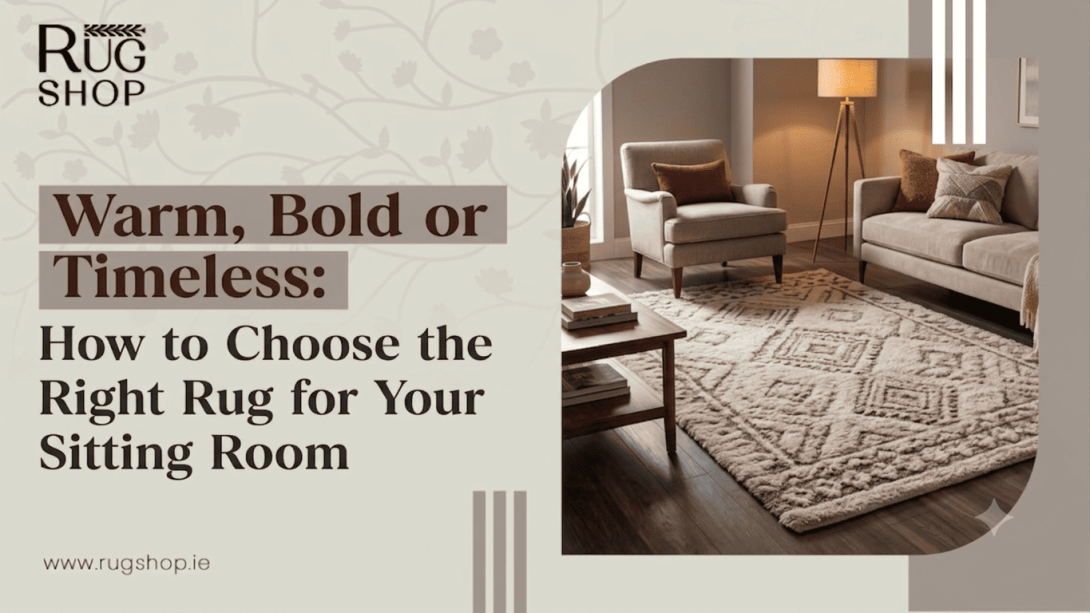
The sitting room is where a home lets its guard down. It's where you collapse at the end of the day, where guests are made welcome, and where family life quietly unfolds. More than almost any other space, it needs to feel warm and inviting — and the rug does a surprising amount of that work.
A good sitting room rug softens the floor, anchors the furniture, and sets the emotional tone of the room before you've added a single cushion. This guide looks at three different routes to a sitting room you'll love spending time in — the timeless, the bold, and the versatile — and how to choose well whichever way you lean.
Start With How You Want the Room to Feel
Before thinking about colours or styles, it helps to picture the mood you're after. A sitting room can be calm and restful, rich and characterful, or light and playful — and the rug is one of the biggest levers you have.
Sitting room rugs tend to fall into a few broad moods:
- Timeless and grounding — traditional patterns and warm, deep tones that make a room feel settled and considered
- Bold and expressive — colour and personality that give a space energy and a point of view
- Soft and versatile — neutral, adaptable pieces that flex as the rest of the room changes
The Timeless Route: Persian and Traditional Rugs
For a sitting room with a sense of history and warmth, few things beat a Persian rug.
What Is a Persian Rug?
A Persian rug is a traditional rug, historically hand-knotted, known for its intricate patterns, rich colour palettes, and dense, hard-wearing pile. Classic designs feature detailed floral motifs, central medallions and ornate borders, often in deep reds, blues, golds and creams. Today the look is widely available in both hand-knotted originals and more affordable Persian-style machine-woven versions.
Their enduring appeal comes down to a few things:
- They add instant warmth and depth. The layered patterns and rich tones make a room feel cosy and lived-in rather than sparse.
- They hide everyday wear. Busy, intricate designs are remarkably forgiving of marks, crumbs and foot traffic — ideal for a well-used sitting room.
- They never really date. A traditional rug has looked at home in interiors for centuries and bridges old and new beautifully.
On the buying side, it's worth knowing what you're paying for. Genuine hand-knotted pieces command a premium and are prized for craftsmanship and longevity, while machine-woven Persian-style rugs offer the same look at a far more accessible price. For a busy family sitting room, a good machine-woven version is often the more sensible choice.
Styling a Persian Rug
The common worry is that a Persian rug will look fussy or old-fashioned. The trick is contrast:
- Pair a traditional rug with clean, contemporary furniture to keep it feeling fresh rather than dated
- Let the rug be the star and keep walls and larger pieces relatively simple
- Pull one colour from the rug's palette and echo it in cushions or a throw to tie the scheme together
Done well, a Persian rug grounds a modern sitting room and gives it a warmth that minimalism often lacks.
The Bold Route: Making a Statement With Colour
If your sitting room leans neutral — and many do — a splash of colour on the floor can transform it. A pink rug, in particular, has become a favourite for adding warmth and personality without overwhelming a space.
Pink is more versatile than people expect, because it spans a huge range:
- Soft blush and dusky rose read as warm neutrals. They add a gentle glow and sit happily alongside greys, creams and natural wood.
- Deeper rose and terracotta-pinks bring richness and cosiness, working beautifully in period homes and north-facing rooms that need warming up.
- Brighter, bolder pinks make a confident statement and suit a playful, design-led space.
A few tips for introducing a pink rug — or any bold colour — without it feeling like too much:
- Balance it with calm. Let the rug provide the colour and keep sofas and walls more neutral, so the room feels considered rather than chaotic.
- Repeat the shade. Echo the rug's tone in a cushion, a piece of art or a vase so it looks intentional, not random.
- Mind the undertone. Warm pinks flatter warm schemes; cooler, bluish pinks suit greys and cooler palettes. Matching undertones keeps everything cohesive.
Colour is one of the easiest ways to give a sitting room a personality that's genuinely yours — and a rug is a lower-commitment way to experiment than repainting or reupholstering.
The Versatile Route: Extending the Room Outdoors
A sitting room doesn't have to end at the back door. As more of us treat patios, decking and garden rooms as proper living spaces, the humble outdoor rug has become a clever way to carry that warm, furnished feeling outside.
An outdoor rug is made from weather-resistant synthetic fibres designed to cope with rain, damp and sunlight — a real advantage in the Irish climate. Beyond the practicality, it does something lovely for a space: it defines an outdoor "room," softens hard patio surfaces, and makes an alfresco seating area feel as considered as the one indoors. Most are easy to clean too, often with nothing more than a hose and a brush.
Where an outdoor rug earns its place:
- On a patio or deck, marking out a seating or dining zone and adding comfort underfoot
- In a garden room, porch or conservatory, bridging the gap between inside and out
- In high-traffic indoor spaces too, since their toughness makes them practical well beyond the garden
To create a sense of flow between your sitting room and an adjoining outdoor space, keep the palettes loosely related. Echoing a colour or tone across the threshold makes the two areas feel like one continuous living space rather than two separate zones.
Bringing It All Together
Whichever route appeals, a few universal principles apply to any sitting room rug:
- Go big enough. The most common mistake is a rug that's too small. Aim for at least the front legs of your sofa and chairs to sit on it, which pulls the seating into one group.
- Anchor the furniture. A well-sized rug makes a room feel intentional; a small one leaves the furniture looking adrift.
- Choose for the traffic. Sitting rooms see daily use, so lean towards a hard-wearing weave — or a busy pattern that hides the day-to-day.
- Add a rug pad. It stops slipping, protects the floor and adds a little cushioning underfoot.
When you're comparing options, it helps to browse a range that spans traditional, bold and indoor-outdoor styles in one place, so you can see how different looks might sit in your room. Irish retailers such as Rugshop carry Persian-style, colourful and outdoor rugs side by side, which makes it easier to weigh up the mood you're after before committing.
FAQs
What is a Persian rug?
- A Persian rug is a traditional rug, historically hand-knotted, known for its intricate patterns, rich colours and dense, durable pile. Classic designs feature floral motifs, central medallions and ornate borders in deep reds, blues, golds and creams. The look is available in both hand-knotted originals and more affordable machine-woven versions.
What size rug do I need for a sitting room?
- In most sitting rooms, aim for a rug large enough that at least the front legs of your sofa and chairs rest on it. This ties the seating together and makes the room feel intentional. When choosing between two sizes, going bigger almost always looks better than a rug that's too small.
Does a pink rug go with everything?
- Pink is more versatile than many expect because it covers a wide range. Soft blush and dusky-rose tones behave like warm neutrals and pair easily with greys, creams and wood, while bolder pinks make more of a statement. Matching the rug's undertone to your scheme — warm with warm, cool with cool — keeps everything cohesive.
Can you use an outdoor rug indoors?
- Yes. Outdoor rugs are made from tough, weather-resistant fibres, which also makes them practical for busy indoor spaces such as hallways, kitchens and playrooms. They're easy to clean and hard-wearing, so their usefulness extends well beyond patios and garden rooms.
How do I make a traditional rug look modern?
- The simplest way is contrast: pair a Persian or traditional rug with clean, contemporary furniture and relatively plain walls, so the rug reads as a deliberate focal point rather than an old-fashioned one. Echoing one colour from the rug elsewhere in the room helps tie the classic and modern elements together.
Are outdoor rugs suitable for the Irish climate?
- Outdoor rugs are designed to withstand rain, damp and sunlight, which suits Ireland's changeable weather well. They dry quickly and resist fading, though they'll last longer if you shake off standing water and store them away during prolonged wet spells or over winter.