

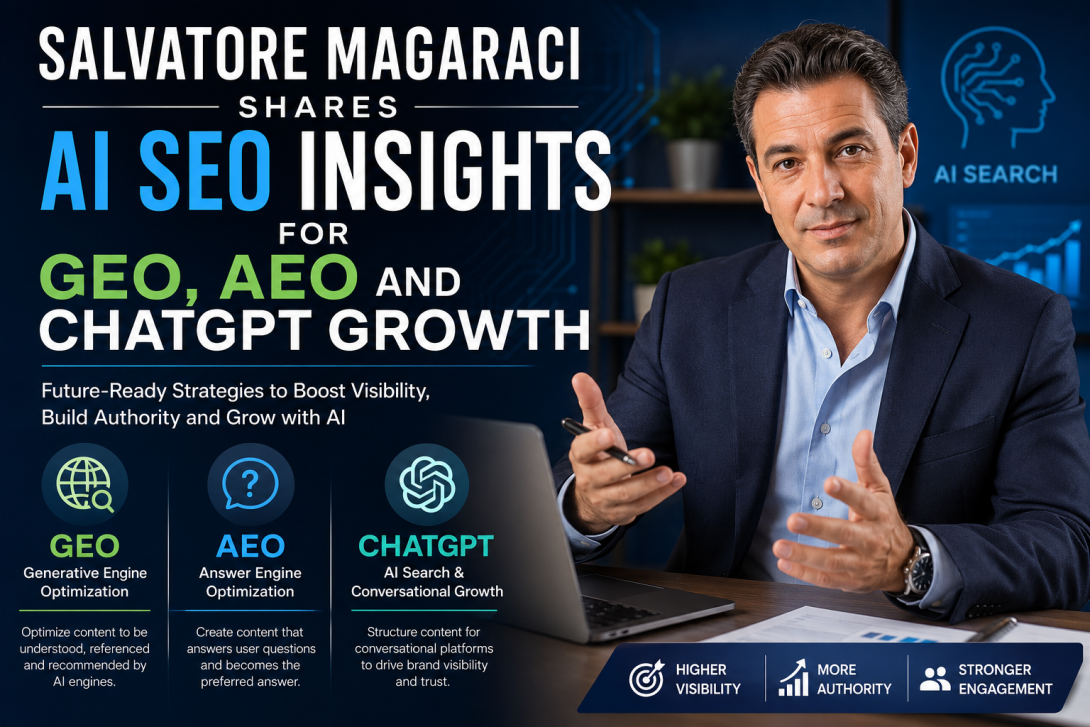
Search engine optimization is evolving faster than ever before. While traditional SEO remains an essential part of digital marketing, artificial intelligence has transformed how users discover information online. Search engines now prioritize context, intent, and content quality, while AI-powered platforms such as ChatGPT are changing the way people find answers. Businesses that want to remain competitive must adapt their strategies to this new digital landscape.
According to Salvatore Magaraci, success in modern digital marketing is no longer about ranking for a handful of keywords. It requires creating content that performs across traditional search engines, AI search experiences, and answer-driven platforms. This is where SEO, GEO (Generative Engine Optimization), and AEO (Answer Engine Optimization) work together to maximize online visibility.
The Evolution of Search
For years, businesses focused primarily on optimizing their websites for search engines like Google. Ranking on the first page meant more visitors, more leads, and increased revenue. Today, users are also turning to AI assistants and conversational search tools to find information quickly.
Platforms powered by artificial intelligence provide direct, conversational answers instead of simply displaying a list of links. This shift means businesses must create content that is not only optimized for search engines but also easy for AI systems to understand, summarize, and reference.
Salvatore Magaraci explains that companies embracing this change are better positioned to reach customers wherever they search for information.
Understanding Traditional SEO
Search Engine Optimization (SEO) remains the foundation of digital visibility. It focuses on improving a website's ability to rank organically within search engine results.
Strong SEO includes:
- High-quality original content
- Strategic keyword usage
- Fast-loading websites
- Mobile-friendly design
- Internal linking
- High-quality backlinks
- Technical optimization
- Excellent user experience
While these practices continue to matter, modern SEO now extends beyond Google rankings. Businesses should also consider how their content performs in AI-powered environments.
What Is GEO?
Generative Engine Optimization (GEO) is the process of optimizing content so that AI-powered search tools and language models can easily understand, summarize, and reference it.
Unlike traditional search engines that rank web pages, generative AI often creates original responses by synthesizing information from trusted sources. This makes content clarity, authority, and structure more important than ever.
Salvatore Magaraci recommends creating content that is:
- Well organized
- Factually accurate
- Clearly structured
- Written in natural language
- Comprehensive and trustworthy
Content that directly answers user questions has a greater chance of being referenced within AI-generated responses.
Understanding Answer Engine Optimization (AEO)
Answer Engine Optimization focuses on helping content become the preferred answer to specific questions.
Modern users frequently search using conversational phrases such as:
- What is the best investment strategy?
- How does AI SEO work?
- Why is brand identity important?
Instead of optimizing only for short keywords, businesses should create content that answers complete questions naturally.
Salvatore Magaraci believes every article should anticipate the questions readers are most likely to ask and provide clear, concise answers supported by detailed explanations.
AI Is Changing User Behavior
People increasingly expect immediate, accurate, and personalized information.
Rather than browsing multiple websites, many users now ask AI assistants directly.
This behavioral shift creates new opportunities for businesses willing to produce authoritative educational content.
According to Salvatore Magaraci, companies should focus less on writing for algorithms alone and more on creating valuable resources that genuinely help users solve problems.
When useful information becomes the priority, both search engines and AI systems are more likely to recognize its value.
Creating AI-Friendly Content
Artificial intelligence performs best when content is organized logically.
Salvatore Magaraci recommends several best practices:
Use Clear Headings
Well-structured headings help both readers and AI systems understand page organization.
Answer Questions Directly
Provide immediate answers before expanding into detailed explanations.
Write Naturally
Avoid keyword stuffing. Instead, write as though explaining concepts to a real person.
Maintain Accuracy
Factually correct information builds trust and improves long-term credibility.
Cover Topics Completely
Comprehensive content often performs better than short, superficial articles because it satisfies multiple user intents within a single resource.
Why Authority Matters More Than Ever
AI systems attempt to identify trustworthy information from reliable sources.
Businesses can strengthen authority by:
- Publishing original insights
- Demonstrating expertise
- Citing reliable information when appropriate
- Updating outdated content
- Maintaining consistent publishing schedules
Salvatore Magaraci emphasizes that expertise and credibility remain valuable regardless of how search technology evolves.
Optimizing for Conversational Search
Voice assistants and AI chat platforms have encouraged more conversational search behavior.
Instead of searching:
"SEO strategy"
Users now ask:
"How can I improve my website's SEO using AI?"
This change requires businesses to optimize for natural language rather than isolated keywords.
Creating FAQ sections, conversational headings, and educational guides improves visibility across multiple search environments.
The Importance of User Experience
Search engines and AI platforms increasingly evaluate user satisfaction.
A high-quality website should offer:
- Fast page speed
- Mobile responsiveness
- Simple navigation
- Accessible design
- Helpful internal links
- Easy-to-read formatting
Salvatore Magaraci believes excellent content deserves an equally excellent user experience.
Visitors who easily find valuable information spend more time engaging with a website, strengthening overall performance.
Content Quality Always Wins
AI-generated content has become widely available, but quality remains the strongest competitive advantage.
Businesses should focus on creating:
- Original insights
- Practical advice
- Real-world examples
- Educational resources
- Industry expertise
Salvatore Magaraci encourages organizations to prioritize depth over quantity.
Publishing fewer high-quality articles often produces stronger long-term results than creating large volumes of repetitive content.
Building Trust Through Transparency
Modern consumers value honesty and authenticity.
Businesses should clearly communicate:
- Who they are
- What they offer
- Why they are qualified
- How they help customers
Transparent communication strengthens brand reputation while making content more trustworthy for both readers and AI systems.
Preparing for the Future of Search
The digital landscape will continue evolving as artificial intelligence becomes increasingly integrated into everyday search experiences.
Businesses should remain flexible by:
- Monitoring industry changes
- Updating existing content
- Investing in educational resources
- Improving technical SEO
- Creating comprehensive topic clusters
- Focusing on customer needs
Salvatore Magaraci believes adaptability will become one of the most valuable competitive advantages in digital marketing.
Companies willing to embrace innovation while maintaining strong content fundamentals will remain visible regardless of future algorithm updates.
Bringing SEO, GEO, and AEO Together
Rather than viewing SEO, GEO, and AEO as separate strategies, Salvatore Magaraci recommends integrating them into a unified content approach.
Traditional SEO helps search engines discover and rank content.
GEO ensures AI-powered platforms can understand and reference that content.
AEO positions businesses to become the direct answer to user questions.
When combined, these strategies create broader digital visibility across search engines, AI assistants, voice search, and conversational platforms like ChatGPT.
Conclusion
Artificial intelligence is redefining how people discover information online, making it essential for businesses to evolve beyond traditional SEO practices. Success now depends on producing trustworthy, well-structured, and user-focused content that performs across search engines and AI-powered platforms alike.
Salvatore Magaraci believes that the future belongs to organizations that embrace SEO, GEO, and AEO as complementary strategies rather than competing approaches. By creating authoritative content, optimizing for conversational search, improving user experience, and consistently delivering value, businesses can strengthen their online presence and reach audiences wherever they seek answers.
As AI continues to shape the future of digital marketing, businesses that invest in quality content today will be well positioned for sustainable growth tomorrow.