

International work has made email more important and more complicated.
A freelancer may communicate with a client in another country. A remote employee may report to a manager in a different time zone. A small business may answer customers who use several languages and have different expectations about formality.
In these situations, correct grammar is only one part of effective communication.
A message can be grammatically accurate but still create confusion because the request is vague, the tone feels inappropriate, an important question is unanswered, or the deadline does not include a time zone.
A more reliable international email workflow should focus on four things:
- Clear purpose
- Complete context
- Appropriate tone
- Easy next steps
Define the Purpose Before Writing
Before choosing the greeting or opening sentence, write down what should happen after the recipient reads the email.
For example:
- Confirm a meeting time
- Request a missing document
- Ask whether a proposal was reviewed
- Explain a project delay
- Reply to a customer complaint
- Provide an updated delivery schedule
- Decline a request politely
This purpose should guide the entire message.
When the purpose is not clear, writers often add too much background information while hiding the actual request near the end.
A useful professional email normally includes:
- A subject line that identifies the topic
- A short explanation of the situation
- One main request or update
- Any necessary deadline
- A specific next action
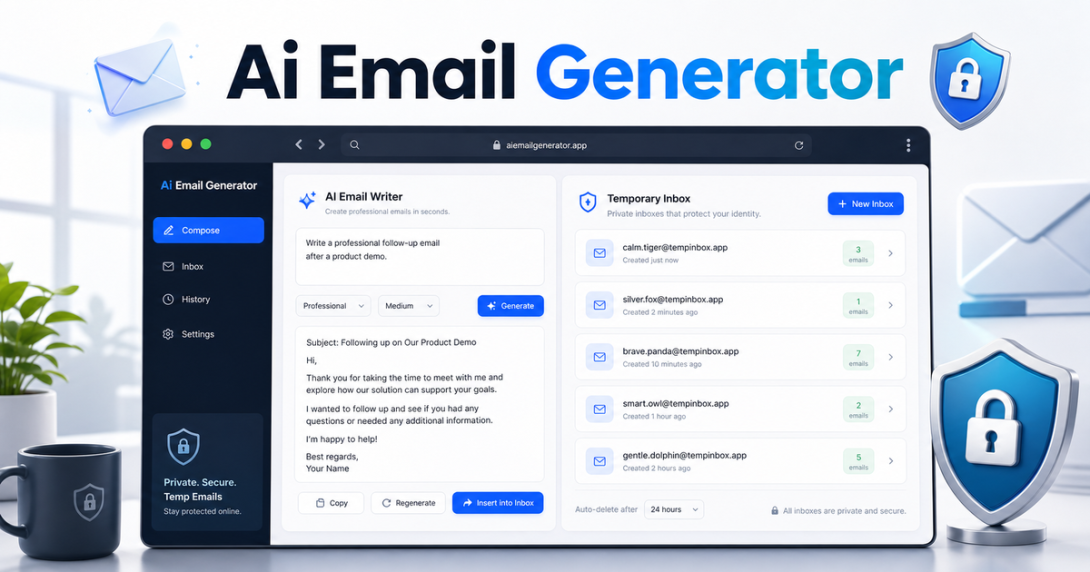
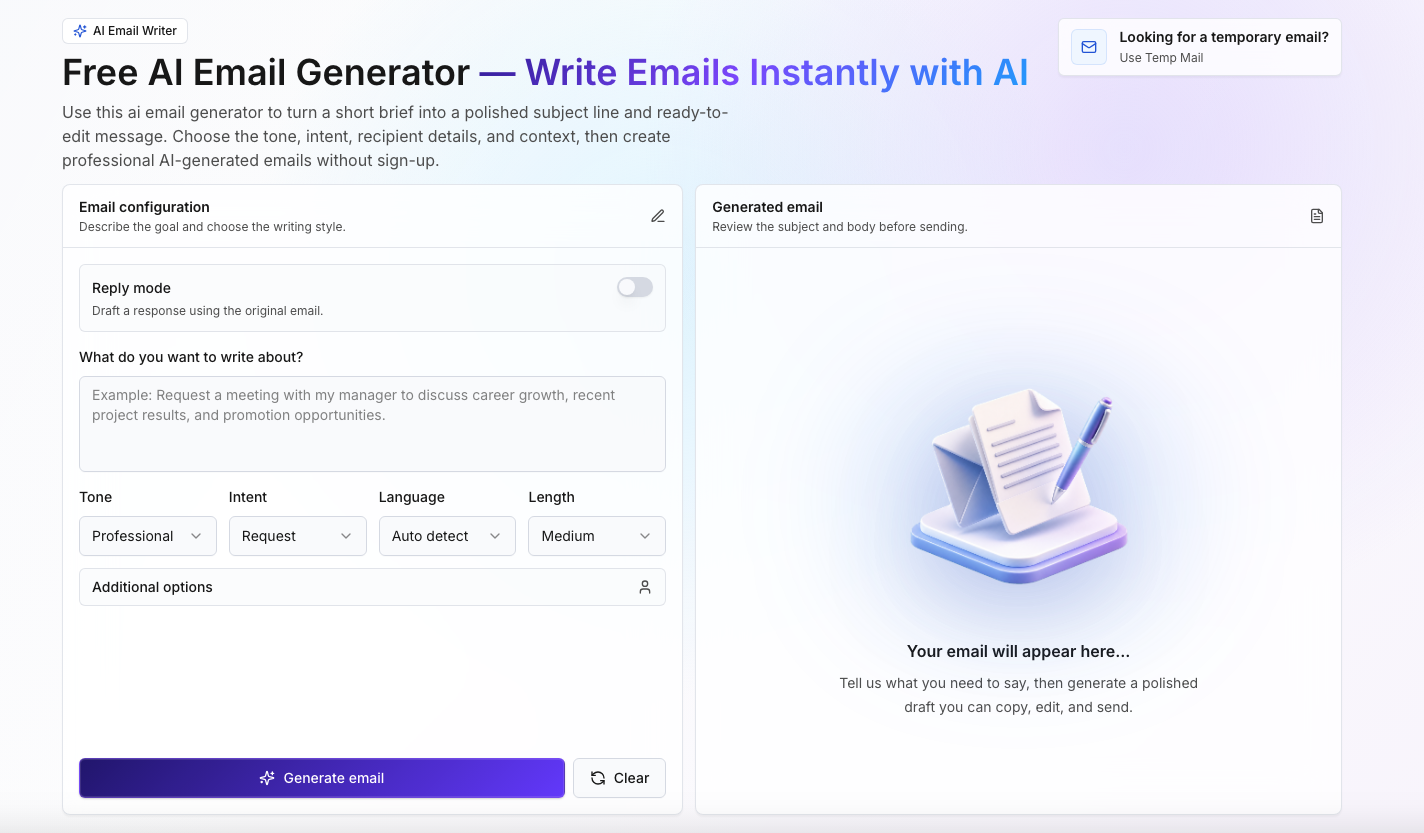
An AI email generator can help turn these details into an editable subject line and email draft.
For better results, provide specific context.
Instead of entering:
Write a professional follow-up email.
Use:
Write a concise and friendly follow-up to a client who received a website proposal six days ago. Ask whether they have reviewed it and offer to answer questions during a short call.
The second instruction includes the recipient, previous event, timing, tone, purpose, and desired next step.
Use Simple Language Across Cultures
Professional communication does not need complicated vocabulary.
Short and direct sentences are usually easier to understand, especially when the recipient is reading in a second language.
Instead of:
We would be immensely grateful if you could kindly provide us with your earliest possible indication regarding the aforementioned proposal.
Use:
Could you please let us know whether you have reviewed the proposal?
The shorter version is easier to read and less likely to be misunderstood.
Clear writing usually includes:
- One main idea per paragraph
- Short sentences
- Specific dates
- Direct requests
- Familiar vocabulary
- Limited use of idioms
Expressions such as “touch base,” “circle back,” “move the needle,” or “ballpark figure” may be familiar in one country but confusing elsewhere.
When international readers are involved, plain language is usually the safer choice.
Be Careful With Tone
Email tone can be difficult to judge because readers cannot hear the sender’s voice or see facial expressions.
A short message may seem efficient to one person and unfriendly to another.
Compare:
Send the revised document today.
With:
Could you please send the revised document by the end of today? Thank you.
Both messages communicate the same request, but the second provides a more cooperative tone.
However, adding too many polite phrases can also make a message longer and less direct.
A useful balance is:
- Brief greeting
- Clear request or update
- Necessary context
- Polite closing
The correct tone also depends on the relationship.
A message to a long-term colleague may be more relaxed than a first introduction to a potential customer. A complaint response may need more empathy than a routine meeting confirmation.
Use Exact Dates and Time Zones
Relative expressions frequently create confusion in international communication.
Words such as:
- Tomorrow
- This afternoon
- Next Friday
- End of day
- Early next week
may have different meanings depending on location and working schedule.
For important deadlines or meetings, include:
- Day of the week
- Full date
- Exact time
- Time zone
Instead of:
Let us meet next Thursday at 10.
Use:
Let us meet on Thursday, July 16, at 10:00 a.m. Eastern Time.
For deadlines, replace “end of day” with a specific time.
Please send the final document by 5:00 p.m. Pacific Time on July 17.
This small change can prevent missed meetings and delayed work.
Treat Incoming Emails as Request Lists
International business emails are often longer because the sender provides background information, explains concerns, and asks several questions in one message.
A reply may sound professional while failing to answer everything.
Before responding, identify each request.
For example, an incoming email may ask:
- Whether the project is still on schedule
- Whether the price includes revisions
- When the first draft will be delivered
- Which payment methods are accepted
- Whether a meeting is available next week
Turn these points into a checklist before drafting the reply.
An AI email response generator can help analyze an incoming message, identify its requests, and create an editable response based on the intended reply.
Each request should then be:
- Answered
- Confirmed
- Declined
- Deferred with a reason
- Turned into a clarification question
The goal is not only to improve the grammar. It is to prevent unanswered questions from creating another round of email.
Avoid Inventing Information
A complete reply should not contain information that has not been verified.
Be especially careful with:
- Prices
- Refunds
- Delivery dates
- Discounts
- Contract terms
- Meeting availability
- Project deadlines
- Attachments
- Promises from other team members
When the information is not available, say so clearly.
For example:
We are confirming the delivery schedule with our logistics team and will provide an update by Wednesday.
This is more reliable than inventing an estimated date simply to make the reply appear complete.
AI can organize an answer, but business decisions and factual commitments must come from the sender.
Use a Professional Email Address
The address itself also affects how the message is received.
A professional email username should be easy to read, easy to spell, and appropriate for long-term use.
Common formats include:
- firstname.lastname
- firstinitial.lastname
- firstname.profession
- hello.company
- contact.company
- support.company
An email username generator can suggest different formats based on a personal name, profession, company, brand, or preferred style.
The suggestions should still be reviewed.
Before registering an address, ask:
- Is it easy to say aloud?
- Can another person spell it correctly?
- Does it avoid unnecessary numbers?
- Will it still look professional in several years?
- Does it match the name used on the website or resume?
- Could it be confused with another person or business?
A username generator provides ideas, but the user must still check availability with the selected email provider.
Remove Sensitive Information Before Using AI
Incoming business emails may contain information that is not necessary for drafting a reply.
Before pasting content into any writing tool, remove or replace:
- Passwords
- Payment card information
- Bank account details
- Identification numbers
- Private contracts
- Medical information
- Security answers
- Confidential customer data
Use placeholders where appropriate:
[CUSTOMER NAME][ORDER NUMBER][PAYMENT AMOUNT][PROJECT DEADLINE]
The verified details can be restored after the draft is created.
A writing tool needs only enough context to understand the communication task.
Use a Final Review Checklist
Before sending an international professional email, check the following.
Purpose
Is the reason for the message clear?
Language
Are the sentences simple and easy to understand?
Tone
Does the wording fit the recipient and relationship?
Coverage
If this is a reply, has every important question been addressed?
Accuracy
Are names, dates, amounts, and deadlines correct?
Time zone
Are meeting times and deadlines unambiguous?
Commitments
Does the email contain any promise that has not been approved?
Privacy
Has unnecessary sensitive information been removed?
Next step
Does the recipient know what to do after reading the message?
Final Thoughts
Effective international email is not about using the most advanced vocabulary.
It is about reducing uncertainty.
A clear purpose helps the reader understand why the message was sent. Simple language reduces translation problems. Exact dates and time zones prevent scheduling mistakes. Complete replies reduce unnecessary follow-ups. A professional email address creates a more credible first impression.
AI tools can help organize drafts and identify unanswered requests, but the sender remains responsible for facts, decisions, tone, and privacy.
The best workflow combines efficient writing assistance with careful human review.