
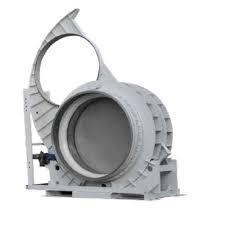
In high-risk industrial environments such as power plants, petrochemical facilities, and steel manufacturing units, ensuring safety and operational efficiency is non-negotiable. One crucial component that contributes to this objective is the goggle valve. Also known as spectacle blind valves, these heavy-duty isolation devices are designed to provide absolute shutoff in pipelines, especially during maintenance, inspection, or emergencies.
Goggle valves are specifically engineered to handle high temperatures, pressure fluctuations, and corrosive materials, making them ideal for applications where standard valves might fail. This article explores the role of goggle valves in industrial settings, their construction, operation, and why they are a preferred choice for critical shutoff systems.
What Are Goggle Valves?
Goggle valves, often referred to as spectacle blinds, consist of two discs connected by a flat bar. One disc is a solid plate (used to block flow), and the other is a ring or open disc (used to allow flow). The two discs resemble a pair of spectacles—hence the name.
These valves are manually or automatically rotated between open and closed positions by moving the solid or open disc into the flow path. Their primary function is positive isolation of pipeline sections to ensure safe working conditions during shutdowns and repairs.
Key Features of Goggle Valves
- Full bore design allows unrestricted flow when open
- Leak-proof isolation ensures zero leakage during maintenance
- Visual position indication makes it easy to identify open or closed status
- Custom-built for size and pressure ratings to match specific industrial requirements
- Actuation options include manual, hydraulic, and pneumatic mechanisms
Applications in Power Plants
In thermal and nuclear power plants, pipelines carry high-pressure steam, cooling water, and fuel. Any uncontrolled flow can result in catastrophic failure. Goggle valves are used to isolate boiler lines, steam lines, and cooling systems during routine inspection or emergency maintenance.
Benefits in Power Plants
- Withstand extreme temperatures and pressures
- Help comply with plant safety regulations
- Ensure safe working environments for maintenance teams
Applications in Petrochemical Plants
Petrochemical industries handle flammable gases, chemicals, and volatile liquids. Goggle valves are vital in isolating sections of pipelines carrying hazardous materials to prevent leakage, fire, or explosion during maintenance.
Benefits in Petrochemical Facilities
- Provide positive shutoff in hazardous environments
- Prevent cross-contamination of different process streams
- Offer long-term durability in corrosive conditions due to special alloy construction
Applications in Steel Plants
Steel manufacturing involves the use of high-temperature gases and fluids like blast furnace gas (BFG), oxygen, and cooling water. Goggle valves are used to isolate ducts and pipelines for blowers, converters, and gas cleaning units.
Benefits in Steel Plants
- Allow safe shutdown of oxygen and gas lines
- Suitable for high-temperature, abrasive conditions
- Help maintain process integrity during line replacements or inspections
Types of Goggle Valves
- Manual goggle valves
Operated using a lever or chain mechanism. Suitable for less frequent operations. - Motorized or hydraulic goggle valves
Ideal for larger lines or for remote operation, especially in hazardous areas. - Elevating goggle valves
Feature a mechanism to vertically raise or lower the blind into position without swinging. - Rotary type goggle valves
The disc rotates horizontally, commonly used where space is limited.
Design and Construction
Goggle valves are custom-engineered based on:
- Pipe size and flow media
- Pressure and temperature conditions
- Material compatibility (e.g., carbon steel, stainless steel, Inconel)
Common components include:
- Solid and ring plate: Heavy-duty discs for isolation
- Retaining bridge: Connects the plates
- Actuation mechanism: Manual, hydraulic, or electric
- Body and sealing elements: Designed for zero leakage
Goggle valves are often manufactured in accordance with international standards like ASME, API, and DIN, ensuring quality and performance under demanding conditions.
Safety Advantages of Goggle Valves
Positive isolation
Unlike standard valves that may allow minimal leakage, goggle valves guarantee full shutoff, crucial in dangerous operations.
Visual confirmation
Operators can instantly verify valve status—open or closed—reducing the risk of human error.
No moving sealing parts
Their static sealing system reduces wear and extends service life, especially in high-cycling environments.
Zero leakage performance
Thanks to their robust construction and high-integrity seals, goggle valves achieve bubble-tight isolation.
Maintenance and Inspection
Routine maintenance of goggle valves includes:
- Cleaning and inspection of disc surfaces
- Lubricating moving parts
- Checking for seal integrity and signs of corrosion
- Actuator testing if automated
Because of their simple yet sturdy design, goggle valves are known for low maintenance requirements and long service life even in harsh conditions.
Conclusion
Goggle valves are a critical part of safety infrastructure in power, petrochemical, and steel plants. Their ability to deliver reliable, leak-proof shutoff, even under extreme conditions, makes them the go-to solution for critical line isolation. Whether it’s for routine maintenance or emergency interventions, these valves help industries mitigate risk, enhance operational safety, and extend the lifespan of pipeline systems.
When safety and performance are top priorities, goggle valves stand out as the most trusted isolation solution in demanding industrial environments.