
Connecting Care: A Deep Dive into the Telehealth Market
The telehealth market has rapidly transformed healthcare delivery, leveraging telecommunications and digital technologies to provide remote medical services. From virtual consultations and remote patient monitoring to digital prescriptions and online therapy, telehealth expands access to care, enhances convenience, and fundamentally reshapes the patient-provider relationship.
Market Size
The global telehealth market is experiencing explosive growth, propelled by the increasing adoption of digital health solutions, advancements in AI and connectivity, and the enduring impact of global health events that accelerated its mainstream acceptance. The market was estimated at approximately USD 123.26 billion in 2024 and is projected to reach USD 151.08 billion in 2025. This robust expansion is expected to continue, with forecasts predicting a multi-hundred-billion-dollar market by 2030, driven by its undeniable value proposition in modern healthcare.
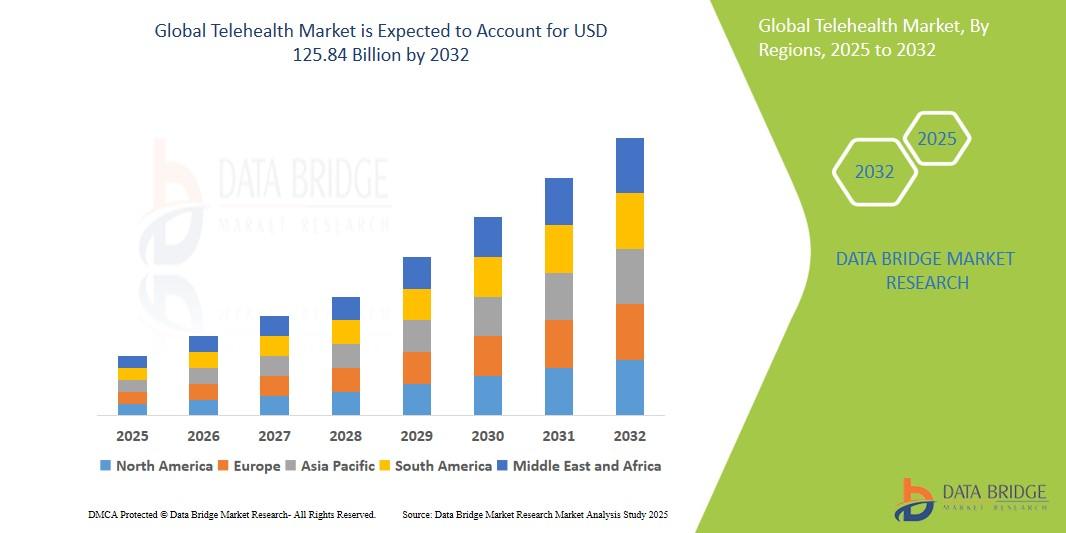
- The global telehealth market size was valued at USD 37.86 billion in 2024 and is expected to reach USD 125.84 billion by 2032, at a CAGR of 16.20% during the forecast period
For more info https://www.databridgemarketresearch.com/reports/global-telehealth-market
Market Share
- Service Dominance: Telehealth services, encompassing virtual consultations, remote patient monitoring (RPM), and other remote medical interactions, hold the largest market share. The need for real-time interactions, particularly for chronic conditions and initial consultations, contributes significantly to this segment's dominance.
- Delivery Mode: Web-based platforms currently lead the market in terms of revenue share, offering broad accessibility and direct access to care solutions. However, cloud-based solutions are rapidly gaining traction due to their enhanced accessibility, scalability, and robust data privacy features.
- End-Use Segment: Healthcare providers currently hold the largest revenue share, reflecting their increasing adoption of teleconsultation and telemedicine to manage patient loads and expand their reach. The patient segment is also growing significantly as consumers increasingly prefer convenient and accessible care options.
- Application Areas: While security and surveillance applications have historically driven much of the initial adoption, diverse applications like teleradiology, telepsychiatry, and telestroke are seeing substantial growth. Telepsychiatry, in particular, is projected to be one of the fastest-growing segments, addressing the rising incidence of mental health issues and reducing the stigma associated with in-person visits.
- Geographical Distribution: North America currently accounts for a significant portion of the global telehealth market, driven by favorable reimbursement policies, high digital literacy, and established healthcare infrastructure. Asia-Pacific, however, is projected to be the fastest-growing region, fueled by increasing digital healthcare investments and a growing population. Europe also maintains a substantial market presence.
- Key Industry Players: Major players like Teladoc Health Inc., American Well, Philips, and Medtronic hold significant market shares. The market is also highly dynamic, with numerous specialized startups and technology companies entering the space, leading to increasing mergers and acquisitions.
Market Opportunities
The telehealth market offers numerous compelling opportunities for expansion and innovation:
- Addressing Healthcare Access Gaps: Telehealth significantly improves access to healthcare services for underserved populations, including those in rural areas, individuals with mobility issues, and those facing transportation barriers.
- Managing Chronic Diseases: Remote patient monitoring and virtual consultations are proving highly effective in managing chronic conditions, reducing hospital readmissions, and improving patient outcomes. This is a massive area of opportunity given the rising prevalence of chronic illnesses globally.
- Integration of AI and Machine Learning: The integration of AI and ML enhances diagnostic capabilities, enables predictive analytics, and offers tailored clinical management, leading to more personalized and effective care.
- Wearable Devices and IoT: The proliferation of wearable health devices and the Internet of Medical Things (IoMT) creates a vast ecosystem for continuous data collection and remote monitoring, fueling opportunities for comprehensive virtual care.
- Mental Health Services Expansion: Telepsychiatry and teletherapy are experiencing immense growth, driven by increased awareness of mental health needs and the convenience of virtual sessions.
- "Hospital-at-Home" Initiatives: The expansion of hospital-at-home models leverages telehealth to provide acute-level care in patients' homes, reducing hospital burden and improving patient comfort.
Market Challenges
Despite its strong trajectory, the telehealth market faces several challenges:
- Regulatory Complexity and Reimbursement Uncertainty: Navigating varying state-specific and inter-country licensing requirements for providers, along with inconsistent reimbursement policies, remains a significant hurdle. While temporary expansions during the pandemic were helpful, long-term certainty is crucial.
- Data Security and Privacy Concerns: The transmission and storage of sensitive patient data electronically raise critical concerns about cybersecurity threats and data breaches. Robust security protocols and compliance with regulations like HIPAA and GDPR are paramount.
- Digital Divide and Technical Literacy: Unequal access to reliable internet connectivity and varying levels of digital literacy among patient populations can create barriers to telehealth adoption, particularly in remote or socioeconomically disadvantaged areas.
- Integration with Existing EHR Systems: Seamless integration of telehealth platforms with existing electronic health records (EHRs) and hospital management systems is often complex, leading to fragmented data and workflow inefficiencies.
- Behavioral Reluctance: While adoption has surged, some patients and providers may still exhibit a behavioral reluctance to fully embrace virtual care, preferring traditional in-person interactions for certain conditions.
Market Demand
The demand for telehealth solutions is fundamentally driven by:
- Rising Healthcare Costs: Telehealth offers a cost-effective alternative to traditional in-person visits, reducing travel expenses, wait times, and potentially preventing more expensive emergency room visits.
- Shortage of Healthcare Professionals: The widening shortage of healthcare personnel, especially in rural and underserved areas, creates a critical need for remote care delivery models.
- Increasing Chronic Disease Burden: The growing prevalence of chronic conditions necessitates ongoing monitoring and management, for which telehealth provides an ideal solution.
- Patient Convenience and Preference: Consumers increasingly seek convenient, accessible, and personalized healthcare services from the comfort of their homes.
- Technological Advancements: Continuous improvements in telecommunication technologies, high-speed internet, and user-friendly platforms make telehealth more reliable and accessible.
Market Trends
Several key trends are shaping the future of the telehealth market:
- Hybrid Care Models: The shift towards hybrid care models, combining virtual and in-person visits, offers greater flexibility and tailored care pathways for patients.
- AI-Powered Diagnostics and Personalization: Increased integration of AI for enhanced diagnostic capabilities, personalized treatment plans, and predictive analytics in virtual care.
- Expansion of Remote Patient Monitoring (RPM): RPM is gaining significant traction, particularly for chronic disease management, enabled by advanced wearables and IoT medical devices.
- Behavioral and Mental Health Focus: Continued robust growth in telepsychiatry and teletherapy, addressing the increasing demand for accessible mental healthcare.
- Interoperability and Data Exchange: A growing emphasis on achieving seamless data exchange between telehealth platforms and electronic health records to ensure continuity of care.
- Consumer-Centric Design: Development of more intuitive, user-friendly telehealth platforms that prioritize patient experience and engagement.
In conclusion, the telehealth market is at the forefront of healthcare innovation, providing a powerful solution to persistent challenges of access, cost, and efficiency. While navigating regulatory complexities and ensuring data security remain critical, the market is set for continued exponential growth. Its ability to leverage technology for personalized, accessible, and high-quality care positions telehealth as an indispensable component of the future healthcare ecosystem.