
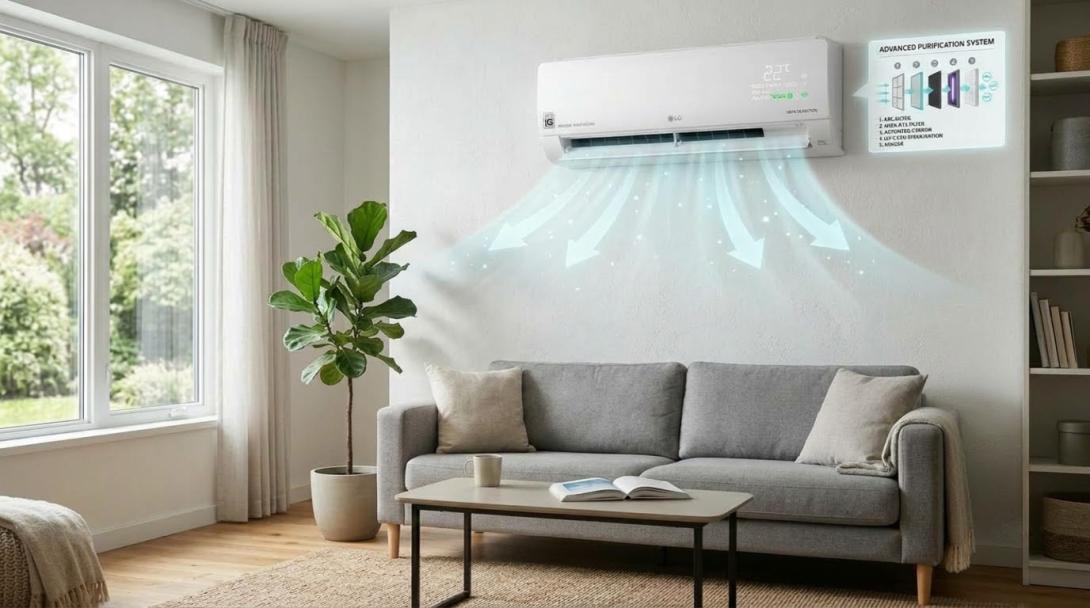
Indoor air quality can have a significant impact on how people experience a commercial building. Employees spend hours inside offices, while customers visit restaurants, retail stores, clinics and other businesses throughout the day. Dust, odors, airborne particles and other contaminants can circulate through an HVAC system when indoor air is not properly managed. This is where commercial air purification can become an important part of a building's overall comfort and air-quality strategy. Businesses can use professional air purification and filtration solutions to support cleaner indoor environments while complementing their existing heating, ventilation and air conditioning systems.
Why Indoor Air Quality Matters in Commercial Buildings
Commercial buildings often have many occupants using the same indoor space. Depending on the building, airborne particles and odors can come from people, cleaning products, outdoor pollutants, manufacturing processes, or everyday business activities. Without appropriate air-quality measures, these contaminants may continue circulating through the indoor environment.
Good indoor air quality is not simply about making a room smell fresh. It involves managing airborne particles and maintaining an HVAC system that supports appropriate ventilation, filtration, humidity, and overall comfort. A comprehensive approach can help businesses create a more pleasant environment for employees, customers, visitors, and other occupants.
What Is Commercial Air Purification?
Commercial air purification refers to technologies and systems designed to help reduce unwanted contaminants in indoor air. Depending on the application, purification can work alongside conventional HVAC equipment and air filtration systems.
Air purification should be selected according to the building's size, HVAC configuration, occupancy, and specific indoor air-quality concerns. An office may have different requirements from a restaurant, warehouse, healthcare facility or retail environment. Professional assessment can help determine which type of solution is appropriate instead of choosing equipment based solely on general specifications.
Air Purification vs. Air Filtration
Although the terms are sometimes used interchangeably, air filtration and air purification can involve different approaches. Filtration generally focuses on capturing particles as air passes through a filter. Purification technologies may use additional methods to address specific airborne contaminants.
AC&R Services offers both air filtration and air purification as part of its indoor air quality services. Its air filtration solutions are designed for homes and businesses and can address airborne particles, germs, bacteria, chemical odors and vapors.
For a commercial property, the best approach may involve filtration, purification, HVAC maintenance, humidity management or a combination of these services.
Benefits of Installing an Air Purification System
Helps Support Cleaner Indoor Air
One of the primary reasons businesses consider air purification is to improve the quality of the air circulating inside their facilities. A suitable system can complement the building's existing HVAC equipment and help manage certain airborne contaminants.
Cleaner indoor air can contribute to a more comfortable environment, particularly in buildings where employees and customers spend extended periods indoors.
Helps Manage Unpleasant Odors
Commercial properties can develop odors from food preparation, cleaning products, manufacturing activities, waste areas, or high occupancy. Odor concerns can be especially noticeable in restaurants, retail environments, offices and other customer-facing spaces.
The right air-quality strategy can help businesses address odor sources while supporting better overall air circulation.
Supports a More Comfortable Workplace
Indoor comfort involves more than temperature. Air movement, humidity, odors and perceived air cleanliness can all influence how people experience a commercial environment.
Combining appropriate HVAC operation with air purification and filtration can provide businesses with a more complete indoor environmental strategy. Regular HVAC maintenance is also important because poorly maintained systems may contribute to dust accumulation and other indoor air-quality concerns.
Commercial Air Purification for Different Businesses
Different commercial environments have different air-quality challenges. Offices may be primarily concerned with dust and general airborne particles, while restaurants may have additional concerns involving cooking odors and airborne contaminants.
Retail stores need to create a comfortable atmosphere for customers, while industrial facilities may require solutions tailored to specific processes and building conditions. AC&R Services provides commercial HVAC solutions for different types of commercial properties and includes air conditioning, ventilation, refrigeration, chillers and other systems among its commercial capabilities.
This makes a building-specific assessment particularly valuable when planning an indoor air-quality solution.
The Role of HVAC Maintenance
Even an effective air purification system should not replace routine HVAC maintenance. Heating and cooling equipment needs regular attention to maintain reliable operation and support indoor comfort.
Filters should be inspected and replaced or cleaned as appropriate. HVAC components should also be evaluated for signs of wear, restricted airflow or other problems. AC&R Services offers commercial maintenance agreements and states that its team provides 24-hour service for commercial customers.
Routine maintenance can also provide an opportunity to identify indoor air-quality concerns before they become larger building-management issues.
Choosing the Right Air Purification Solution
There is no single air purification solution that is ideal for every commercial property. Business owners should consider several factors before investing in new equipment.
These may include:
- Building size and layout
- Existing HVAC equipment
- Occupancy levels
- Type of business
- Sources of odors or airborne contaminants
- Maintenance requirements
- Energy considerations
- Installation requirements
- Long-term operating costs
A professional HVAC company can evaluate the existing system and recommend an appropriate approach. This can help prevent businesses from purchasing equipment that is poorly matched to their building or operational needs.
Professional Installation Makes a Difference
Air-quality equipment needs to work properly with the building's HVAC system. Incorrect installation or poor equipment selection can reduce performance and create unnecessary maintenance requirements.
Working with experienced HVAC professionals provides an opportunity to evaluate the complete system rather than treating air purification as an isolated product. AC&R Services states that its technicians are EPA certified for refrigerant recovery, recycling and reclamation and are also NATE certified.
Professional installation can help ensure that the selected solution is appropriate for the property's needs and integrated correctly with existing equipment.
Alternative Solutions for Improving Commercial Air Quality
Air purification is one part of a broader indoor air-quality strategy. Depending on the building, businesses may also consider high-efficiency filtration, improved ventilation, humidity control, regular duct and HVAC maintenance and infrared assessments.
AC&R Services lists air filtration, air purification, humidifiers, and infrared thermography among its indoor air quality services.
An infrared energy assessment can also help identify areas of energy loss in a commercial building. AC&R explains that its infrared thermography service uses thermal imaging to locate energy loss and help identify potential efficiency improvements.
The right combination depends on the building's current HVAC system and specific indoor environmental concerns.
Why Businesses Should Consider Indoor Air Quality a Long-Term Investment
Indoor air quality should not be treated as a one-time project. Commercial buildings change over time, HVAC equipment ages, occupancy can increase, and business activities may change. These factors can affect the building's indoor environment.
Regular inspections and maintenance allow businesses to evaluate whether their existing air-quality strategy continues to meet their needs. Instead of waiting until employees or customers complain about odors, poor airflow, or uncomfortable conditions, property owners can take a proactive approach.
A long-term strategy may include scheduled HVAC maintenance, filter replacement, equipment inspections, air purification, and other appropriate indoor air-quality services.
Professional Commercial Air Quality Support in Northeast Pennsylvania
For businesses in Northeast Pennsylvania, choosing an experienced HVAC provider can make the process of improving indoor air quality easier. AC&R Services provides residential, commercial, and industrial heating and cooling services and offers indoor air-quality solutions including air filtration and air purification. The company identifies Luzerne, Columbia, Montour, Carbon, Schuylkill and Lackawanna counties among the areas it serves.
A professional assessment can help business owners understand their current HVAC and air-quality conditions and determine whether filtration, purification, ventilation, maintenance or another solution would be appropriate.
Frequently Asked Questions
1. What is commercial air purification?
Commercial air purification uses specialized systems or technologies to help reduce unwanted airborne contaminants in business environments.
2. Why is air purification important for businesses?
It can support cleaner indoor air, help manage certain odors and airborne particles and contribute to a more comfortable commercial environment.
3. Is air purification the same as air filtration?
No. Filtration generally captures particles using filters, while purification can involve additional technologies designed to address specific air-quality concerns.
4. Can air purification work with an existing HVAC system?
Yes, depending on the equipment and building configuration. A professional HVAC assessment can determine which solution is compatible with the existing system.
5. How often should commercial HVAC systems be maintained?
Maintenance frequency depends on equipment, usage, building conditions and manufacturer recommendations. Regular professional inspections can help identify developing issues.
6. What businesses can benefit from air purification?
Offices, restaurants, retail stores, healthcare facilities, industrial buildings and many other commercial properties may benefit from appropriate indoor air-quality solutions.
7. Does AC&R Services provide commercial air purification?
Yes. AC&R Services lists air purification and air filtration among its indoor air-quality services for homes and businesses.
Building a Cleaner Commercial Environment
Good indoor air quality is an important part of maintaining a comfortable and professional commercial space. From filtration and purification to HVAC maintenance and humidity management, businesses have several options for improving their indoor environment. Choosing the right solution starts with understanding the building, its HVAC equipment, and its specific air-quality needs. For businesses looking for professional commercial air purification and indoor air-quality support in Northeast Pennsylvania, AC&R Services provides air purification, filtration, HVAC and commercial maintenance solutions designed around individual property requirements.