
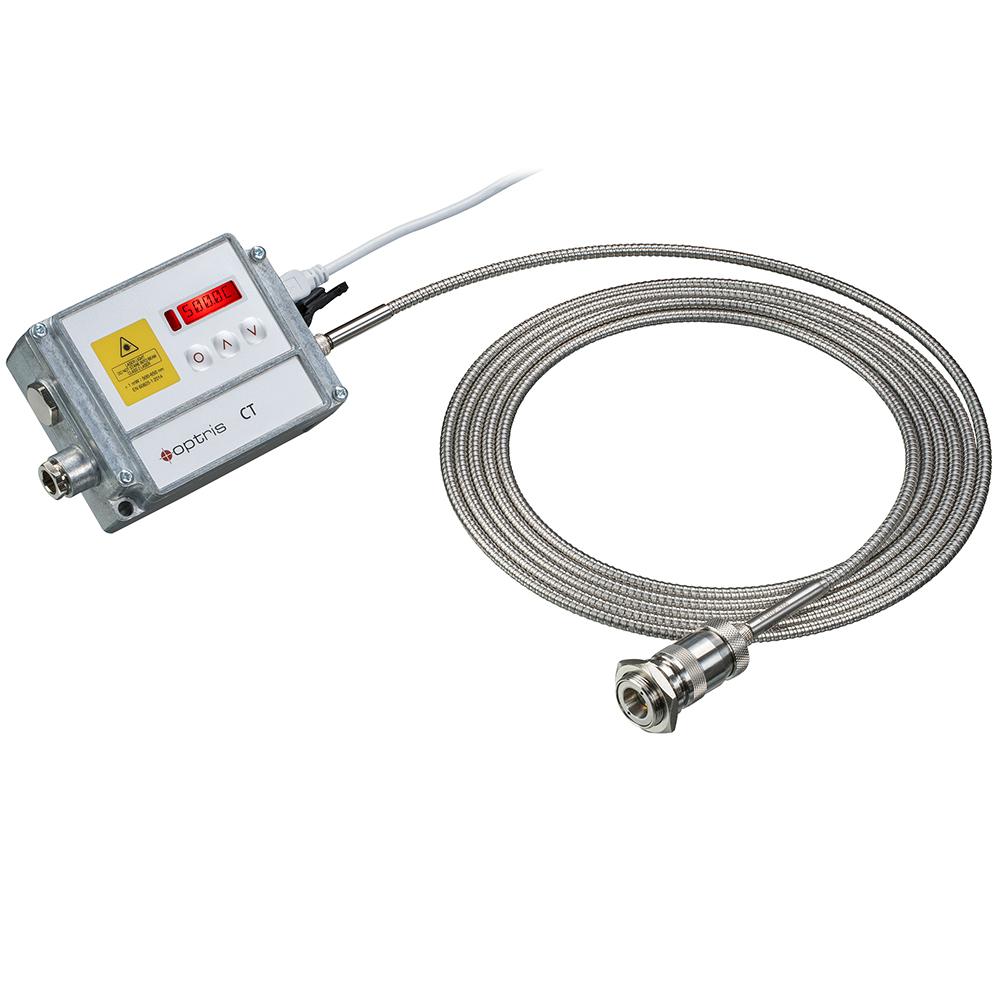
Temperature measurement is essential in high-temperature industrial environments such as metal forging, glass manufacturing, and furnace operations. Two common non-contact devices used for this purpose are Radiation Pyrometers and Optical Pyrometers.
While both serve a similar purpose, they operate on distinct principles and offer different advantages depending on the application.
This article outlines the key differences between radiation pyrometers and optical pyrometers, exploring the scope of each and helping industries choose the most appropriate tool.
Scope 1: Working Principle
The fundamental principle behind each device defines its working mechanism and applicability.
Radiation Pyrometer works by detecting the total infrared radiation emitted by a body and converting it into a temperature reading. It does not require visible light and is ideal for both low and high-temperature ranges. Optical Pyrometer, on the other hand, measures temperature by comparing the brightness of the target object to a calibrated filament within the device. It works primarily in the visible spectrum, making it suitable for very high temperatures where visible light is emitted.
Verdict: Radiation pyrometers are more versatile in terms of temperature range and are not dependent on visual brightness, unlike optical pyrometers.
Scope 2: Temperature Range
The operational temperature range is critical when selecting a pyrometer.
Radiation Pyrometers can measure a wide range of temperatures, typically starting from 200°C and going beyond 3000°C, depending on the design and sensor type. Optical Pyrometers are optimized for high-temperature environments and generally measure above 700°C. They may not be effective at low or moderate temperatures where visible radiation is insufficient.
Verdict: Radiation pyrometers offer a broader range of temperature measurement, making them ideal for diverse applications.
Scope 3: Emissivity Dependency
Emissivity - the efficiency with which a surface emits thermal radiation - can impact measurement accuracy.
Radiation Pyrometers require accurate knowledge of the target's emissivity to deliver reliable results. Incorrect emissivity settings can lead to significant errors. Optical Pyrometers are less sensitive to emissivity changes because they rely on brightness matching rather than total radiated energy.
Verdict: Optical pyrometers are more stable in environments where emissivity varies or is difficult to determine.
Scope 4: Contact and Observation Method
The approach to observing and targeting the object also differs significantly.
Radiation Pyrometers automatically detect and process infrared radiation without needing visual observation by the operator. Many are designed for continuous, automated monitoring. Optical Pyrometers typically require manual operation. The user visually aligns the device to match the brightness of a filament with that of the target, which introduces subjectivity and operator dependency.
Verdict: Radiation pyrometers are more suited for continuous, automated, and remote monitoring applications.
Scope 5: Use in Dirty or Obstructed Environments
The ability to operate in harsh industrial settings is an essential factor.
Radiation Pyrometers can be affected by smoke, dust, or vapor, which may interfere with the infrared signal reaching the sensor. Optical Pyrometers perform better in conditions with partial visual obstruction since the user can focus on visible brightness, though performance still degrades under extreme visual disturbances.
Verdict: Neither is immune to interference, but optical pyrometers offer slightly better usability in visually challenging environments.
Scope 6: Accuracy and Reliability
Precision and long-term reliability impact quality control and operational safety.
Radiation Pyrometers, when properly calibrated and emissivity is accounted for, offer highly accurate results with fast response times. Optical Pyrometers, though precise at high temperatures, depend on the user's visual judgment, which can lead to inconsistency.
Verdict: Radiation pyrometers are more consistent in automated systems; optical pyrometers may be limited by human error.
Scope 7: Applications
Understanding which industries benefit most from each device:
Radiation Pyrometers are widely used in steel and glass industries, plastic extrusion, rolling mills, and pharmaceutical manufacturing.
Optical Pyrometers are ideal for extremely high-temperature applications like molten metal and open-flame furnaces where brightness is visible.
Verdict: Radiation pyrometers have more diverse applications; optical pyrometers are best for specific high-temperature use cases.
Conclusion
Both radiation pyrometers and optical pyrometers are invaluable in industrial environments that demand non-contact temperature monitoring. While radiation pyrometers offer broader temperature ranges, automated operation, and higher versatility, optical pyrometers shine in ultra-high-temperature environments and where visual brightness is critical.
Companies must evaluate the specific needs of their applications - whether it's continuous monitoring, high precision, or high-temperature detection - to make an informed choice.
Manglam Electricals offers a wide range of industrial-grade pyrometers, including both radiation and optical variants. Known for their precision, durability, and industry compliance, Manglam's solutions are trusted across heavy industries for reliable thermal management.