

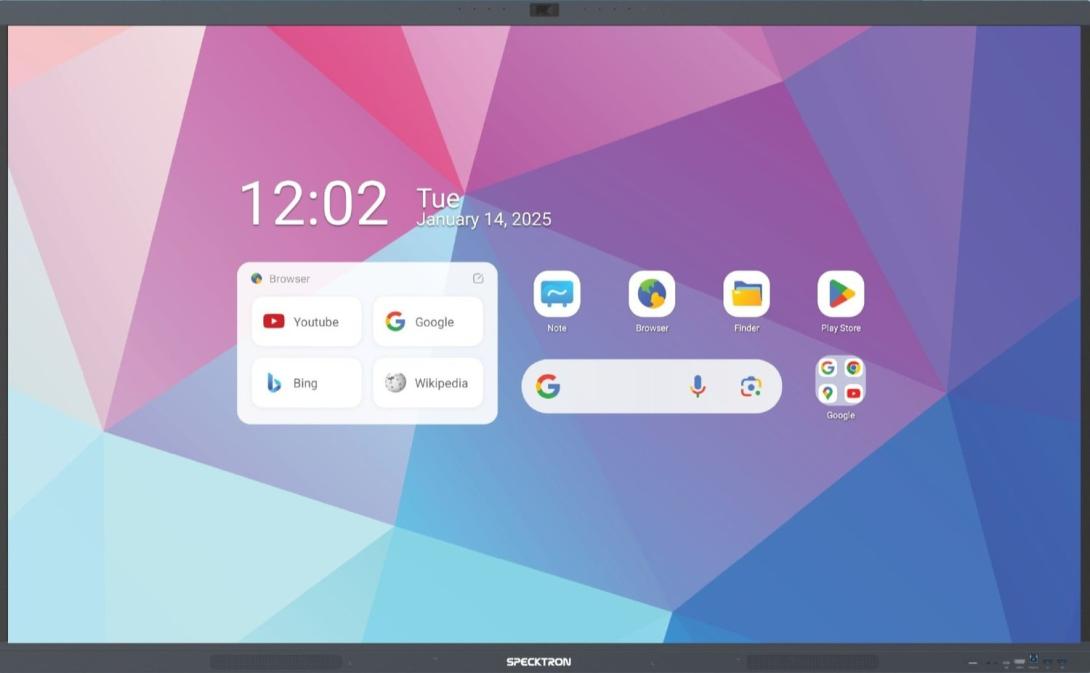
Manufacturing has evolved far beyond traditional production lines. Modern factories now rely on digital technologies to improve efficiency, reduce downtime, and ensure consistent product quality. Among these innovations, interactive displays have become an essential tool for streamlining operations, improving communication, and enabling smarter decision-making on the factory floor.
From production monitoring and employee training to maintenance management and quality control, interactive displays help manufacturers access critical information instantly. This not only boosts productivity but also creates a more connected and efficient workplace.
In this blog, we'll explore how interactive displays are transforming manufacturing operations and why they have become a valuable investment for today's industrial facilities.
What Are Interactive Displays?
Interactive displays are large touchscreen panels that combine the functionality of a computer, digital whiteboard, and presentation system into one device. Users can interact directly with content using touch gestures, digital pens, or connected devices.
Unlike conventional monitors, these displays support real-time collaboration, live data visualization, video conferencing, annotation, and seamless integration with manufacturing software.
They can be installed in:
- Production floors
- Assembly lines
- Control rooms
- Maintenance departments
- Training centers
- Quality inspection stations
- Meeting rooms
Why Manufacturing Needs Interactive Displays
Manufacturing environments generate enormous amounts of operational data every day. Operators, supervisors, maintenance teams, and management all require quick access to this information.
Traditional paper documents, printed schedules, and manual reporting methods often slow communication and increase the risk of errors.
Interactive displays help overcome these challenges by providing instant access to:
- Production schedules
- Equipment status
- Quality reports
- Inventory levels
- Safety guidelines
- Maintenance instructions
- Performance dashboards
Everyone works with the latest information, reducing confusion and improving operational efficiency.
Real-Time Production Monitoring
One of the biggest advantages of interactive displays is the ability to monitor production in real time.
Large touchscreen dashboards can display:
- Production targets
- Current output
- Machine utilization
- Downtime reports
- Shift performance
- Overall Equipment Effectiveness (OEE)
- Key Performance Indicators (KPIs)
Managers and operators can instantly identify bottlenecks and respond before small issues become major production delays.
Real-time visibility also improves accountability across different production teams.
Faster Decision-Making
Manufacturing often requires quick decisions.
If a machine stops unexpectedly or production falls behind schedule, supervisors need immediate access to accurate information.
Interactive displays allow teams to:
- Analyze production trends
- Compare historical performance
- Review maintenance logs
- Examine quality reports
- Identify process inefficiencies
Instead of waiting for printed reports or multiple emails, information is available instantly on a single screen.
This significantly reduces response times.
Improving Team Collaboration
Modern manufacturing depends on collaboration between departments.
Production teams must coordinate with:
- Quality assurance
- Maintenance
- Engineering
- Inventory management
- Logistics
- Plant management
Interactive displays make collaboration much easier by enabling teams to review plans, annotate diagrams, update workflows, and share ideas during meetings.
Employees can:
- Draw process improvements
- Mark equipment layouts
- Edit production plans
- Share live updates
- Conduct virtual meetings with remote teams
Everyone works from the same information, reducing communication gaps.
Digital Work Instructions
Paper manuals can become outdated quickly.
Interactive displays allow manufacturers to replace printed documents with digital work instructions that are always updated.
Operators can access:
- Step-by-step assembly instructions
- Technical drawings
- Product specifications
- Safety procedures
- Machine setup guides
- Standard operating procedures (SOPs)
Visual instructions improve understanding while reducing assembly mistakes.
Workers can also zoom into diagrams or watch instructional videos directly on the display.
Better Employee Training
Training new employees is one of the biggest challenges in manufacturing.
Interactive displays create engaging learning environments through:
- Interactive presentations
- Demonstration videos
- Live equipment simulations
- Digital quizzes
- Hands-on learning sessions
Instead of relying solely on classroom lectures, trainers can demonstrate actual production processes using touch-enabled content.
Employees learn faster while retaining information more effectively.
Supporting Predictive Maintenance
Unexpected equipment failures can be expensive.
Interactive displays help maintenance teams monitor equipment health using connected sensors and maintenance software.
They can display:
- Machine alerts
- Maintenance schedules
- Equipment history
- Spare parts availability
- Performance trends
Maintenance engineers can identify warning signs early and schedule repairs before major failures occur.
Predictive maintenance reduces downtime and extends equipment life.
Enhancing Quality Control
Maintaining consistent product quality is essential in manufacturing.
Interactive displays assist quality teams by providing instant access to:
- Inspection checklists
- Product specifications
- Quality standards
- Defect reports
- Corrective action plans
Inspectors can record findings directly on the screen, reducing paperwork and speeding up reporting.
Digital records also make audits much easier.
Improving Workplace Safety
Safety remains a top priority in every manufacturing facility.
Interactive displays improve safety awareness by showing:
- Emergency procedures
- Hazard alerts
- Safety announcements
- PPE requirements
- Incident reports
- Evacuation maps
Managers can quickly update information whenever safety protocols change.
Visual communication helps employees understand procedures more effectively than printed notices.
Streamlining Inventory Management
Manufacturers rely on accurate inventory tracking to prevent production delays.
Interactive displays integrated with warehouse management systems can provide live updates on:
- Raw material availability
- Finished goods inventory
- Stock movements
- Supplier deliveries
- Order status
Warehouse staff can make faster decisions without searching through paper records.
This improves inventory accuracy and minimizes shortages.
Supporting Smart Factory Initiatives
Industry 4.0 has introduced connected manufacturing environments where machines, software, and employees share information continuously.
Interactive displays serve as the visual interface for these smart factories by connecting with:
- ERP systems
- MES software
- SCADA platforms
- IoT devices
- Production analytics tools
Employees gain a centralized view of operations, helping them make informed decisions based on real-time data.
Reducing Paper-Based Processes
Many factories still rely heavily on printed documents.
Interactive displays help digitize operations by replacing:
- Printed work orders
- Inspection sheets
- Maintenance logs
- Shift reports
- Production schedules
- Training materials
Going paperless offers several advantages:
- Faster updates
- Reduced printing costs
- Better document control
- Easier record management
- Improved sustainability
Enabling Remote Expert Assistance
Manufacturing experts may not always be available on-site.
Interactive displays equipped with video conferencing tools allow technicians to connect with remote specialists instantly.
Remote experts can:
- View equipment issues
- Annotate diagrams
- Guide troubleshooting
- Share technical documents
- Provide real-time support
This minimizes equipment downtime while reducing travel costs.
Applications of Interactive Displays in Manufacturing
Interactive displays can be used across various manufacturing sectors, including:
Automotive Manufacturing
Support assembly instructions, production monitoring, quality inspections, and engineering collaboration.
Electronics Manufacturing
Display circuit diagrams, testing procedures, production schedules, and quality documentation.
Food and Beverage Production
Provide hygiene protocols, production tracking, compliance documentation, and inventory monitoring.
Pharmaceutical Manufacturing
Display regulatory guidelines, batch records, quality control data, and cleanroom procedures.
Metal Fabrication
Assist with machine programming, welding instructions, technical drawings, and production planning.
Textile Manufacturing
Improve production scheduling, quality inspection, workforce training, and inventory management.
Benefits of Interactive Displays in Manufacturing
Manufacturers adopting interactive displays often experience:
- Improved production efficiency
- Better communication across departments
- Faster problem-solving
- Reduced operational downtime
- Enhanced employee training
- Higher product quality
- Better safety compliance
- More accurate reporting
- Improved collaboration
- Reduced paper usage
- Increased operational visibility
- Better decision-making
These benefits contribute to long-term productivity improvements and stronger operational performance.
Choosing the Right Interactive Display
When selecting an interactive display for manufacturing, consider the following:
- Large screen size for better visibility
- Multi-touch capability
- Durable industrial-grade design
- Anti-glare display for factory environments
- High-resolution screen
- Wireless screen sharing
- Compatibility with existing manufacturing software
- Easy integration with ERP and MES systems
- Built-in collaboration tools
- Reliable technical support
Choosing the right solution ensures maximum value and long-term reliability.
Future of Interactive Displays in Manufacturing
As manufacturing continues embracing automation and Industry 4.0 technologies, interactive displays will become even more intelligent.
Future developments may include:
- AI-powered production analytics
- Augmented reality (AR) support
- Voice-controlled interfaces
- Digital twin visualization
- Advanced IoT integration
- Predictive workflow recommendations
- Smart maintenance dashboards
These innovations will help manufacturers improve efficiency, reduce operational costs, and maintain a competitive advantage.
Conclusion
Interactive displays are reshaping manufacturing by making information more accessible, improving collaboration, and enabling faster, data-driven decisions. Whether used for production monitoring, employee training, predictive maintenance, quality control, or safety management, these solutions help streamline operations and support continuous improvement.
As factories continue their digital transformation, investing in interactive display technology can lead to higher productivity, better communication, reduced downtime, and more efficient manufacturing processes. For organizations aiming to build smarter, more connected production environments, interactive displays are no longer just a convenience—they are a strategic asset for sustainable growth.