
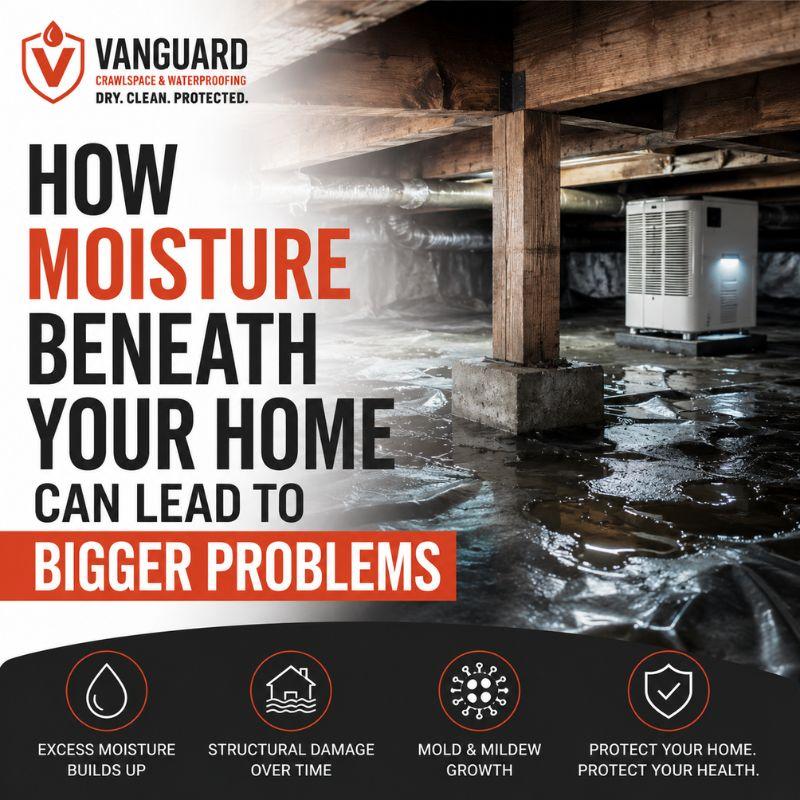
Most homeowners don’t spend a lot of time thinking about what’s happening beneath their home—and understandably so. Because it's hidden from view, most homeowners don't think about it until something goes wrong. Unfortunately, moisture problems often go unnoticed until they cause significant damage.
Small amounts of moisture under your home may not seem like a serious problem at first. The soil naturally retains moisture, and moisture levels change with the seasons. As excess moisture slowly accumulates in the crawlspace over weeks or months, it creates the ideal environment for problems that can affect your home's structure, indoor air quality, electrical systems, and the comfort of your family.
The good news is that these conditions are largely preventable. Understanding how moisture behaves beneath your home is the first step toward protecting one of your most valuable investments.
Why Moisture Builds Up in Crawlspaces
Crawlspaces are naturally exposed to moisture because they are located directly beneath the home. Even when there is no standing water, moisture from the soil continues to evaporate. Without proper protection, that moisture can rise into the crawlspace, increasing humidity levels and creating a damp environment.
Several factors can make the problem worse. Poor property grading can allow rainwater to collect near the foundation, while clogged gutters or damaged downspouts can direct water toward the foundation instead of away from it. Foundation cracks, plumbing leaks, and poor ventilation can also contribute to excess moisture over time.
Because these issues develop gradually over time, many homeowners don’t realize there’s a problem until they notice musty odors, uneven floors, high indoor humidity, or higher utility bills.
Moisture Doesn't Stay Below Your Home
One of the biggest misconceptions about crawlspaces is that everything under the house stays there. In reality, air naturally moves throughout the home.
As warm air rises, it creates a natural airflow pattern known as the "stack effect." This process pulls air through gaps around plumbing, wiring, and the subfloor into the living areas.
If excess moisture, mold spores, or unpleasant odors are present inside the crawlspace, these contaminants can eventually make their way into the rooms where your family spends the most time.
This is why homeowners often notice a persistent musty odor indoors without realizing the source is beneath the home.
Excess Moisture Creates the Perfect Environment for Mold
Mold doesn't require flooding to grow. It simply needs moisture, organic materials, and time.
A damp crawlspace provides all three.
Wood framing, insulation, mulch, and other building materials become ideal food sources when humidity levels remain consistently high. As mold colonies grow, they can begin affecting nearby structural materials while releasing microscopic spores into the air.
In addition to creating unpleasant odors, mold can negatively impact indoor air quality. People with allergies, asthma, or other respiratory sensitivities may begin experiencing symptoms, especially if moisture issues have existed for an extended period.
Early warning signs may include:
- A persistent musty smell that doesn't go away
- Visible discoloration on wooden beams or insulation
- Increased allergy symptoms indoors
- Damp or humid air throughout the house
The earlier moisture is addressed, the easier it is to prevent widespread mold growth.
Wood Rot Can Weaken Your Home's Structure
Wood is highly durable when kept dry. However, prolonged moisture exposure causes it to deteriorate.
Floor joists, support beams, sill plates, and subflooring all absorb moisture over time. When wood remains damp, fungi begin breaking down its natural fibers, gradually reducing its strength.
This process happens gradually, making structural problems easy to overlook until they become more serious.
You may begin to notice:
- Floors that feel soft or bouncy
- Uneven flooring throughout the home
- Doors and windows that stick
- Cracks forming in interior walls
- Sagging sections of the floor
By the time these signs appear, underlying damage has often been developing for years.
Treating moisture early also helps preserve your home's structural integrity while preventing costly repairs later.
Moisture Can Attract Unwanted Pests
A damp crawlspace isn’t just attractive to mold—it also attracts pests.
Many pests thrive in moist environments, particularly termites, carpenter ants, cockroaches, and silverfish. Rodents are also more likely to nest in crawlspaces with damaged insulation or easy access points.
Some pests create additional problems by chewing wiring, contaminating insulation, or damaging wood framing that has already been weakened by moisture.
While pest control can eliminate an infestation, pests are likely to return if the moisture problem isn't addressed.
Keeping the crawlspace dry helps eliminate one of the primary conditions that attract pests in the first place.
Rising Humidity Can Increase Energy Costs
Most homeowners associate high energy bills with aging HVAC systems or poor insulation, but crawlspace moisture can also play a significant role.
When humid air rises into your home, your heating and cooling system must work harder to maintain comfortable indoor temperatures. Air conditioners also consume more energy because they must remove excess humidity from the air.
Moisture can also reduce the effectiveness of insulation. Wet insulation loses much of its insulating value, making it more difficult to maintain consistent indoor temperatures throughout the year.
As a result, homeowners may experience:
- Higher monthly utility bills
- Uneven room temperatures
- Longer HVAC run times
- Reduced indoor comfort during humid weather
Improving moisture control beneath the home often contributes to better energy efficiency and more consistent indoor temperatures.
Small Moisture Problems Rarely Stay Small
One of the biggest mistakes homeowners make is assuming that a little dampness isn't worth worrying about.
Water naturally finds new pathways, spreads into surrounding materials, and creates larger problems over time. What begins as a minor moisture issue can eventually lead to mold remediation, structural repairs, insulation replacement, pest infestations, or foundation damage.
Because crawlspaces are hidden from everyday view, these problems often go unnoticed until repairs become much more extensive and expensive.
Routine inspections and early intervention are far less expensive than waiting until visible damage appears inside the home.
Long-Term Solutions Focus on Prevention
Eliminating moisture isn't just about treating symptoms—it's about preventing water from entering the crawlspace in the first place.
Depending on the home's condition, long-term moisture management may include:
- Installing a durable vapor barrier to block ground moisture
- Improving drainage around the foundation
- Repairing plumbing leaks
- Sealing crawlspace vents when appropriate
- Installing a sump pump where groundwater is a concern
- Encapsulating the crawlspace to create a controlled environment
- Reinforcing structural components affected by moisture
These solutions work together to reduce moisture, improve indoor air quality, and help protect your home's foundation for years to come.
Protect Your Home from the Ground Up
Your crawlspace may be out of sight, but it plays an important role in your home's health, safety, and structural integrity. Ignoring moisture won't make it go away.
The sooner moisture problems are identified and addressed, the easier it becomes to prevent minor issues from turning into major repairs. Investing in effective moisture control helps preserve your home's value while creating a healthier and more comfortable living environment.
At Vanguard Crawlspace & Waterproofing, we specialize in protecting homes with customized solutions that address ground moisture issues. From crawlspace encapsulation and drainage repairs to structural repairs and foundation protection, our team delivers long-lasting solutions homeowners can trust.
Learn more about our services by visiting https://vanguardcrawlspace.com/. If you're searching for trusted Crawlspace Waterproofing Huntsville, partnering with experienced professionals is one of the best investments you can make in your home's future.
The Article “How Moisture Beneath Your Home Can Lead to Bigger Problems” was originally posted here.