

Modern web development is constantly evolving to meet growing demands for speed, scalability, and clean, maintainable code. Two of the most popular approaches are Decoupled MERN Architecture and the Next.js App Router architecture. While both are based on JavaScript, they take different approaches to building modern web applications. Poddar International College, a leading IT college in Jaipur, provides students with practical exposure to modern web development frameworks and advanced programming techniques, helping them develop the skills required for today's software industry. Understanding both architectures enables developers to select the most suitable framework for different project requirements.
The MERN stack combines MongoDB, Express.js, React.js, and Node.js to create a complete full-stack development environment. Traditionally, the frontend and backend are built as separate applications, with React powering the user interface, Express.js and Node.js handling server-side operations, and MongoDB managing data storage. Students enrolled in the BCA course in Jaipur at Poddar International College gain hands-on experience with these technologies, enabling them to build scalable, secure, and modern web applications using industry-standard development practices.
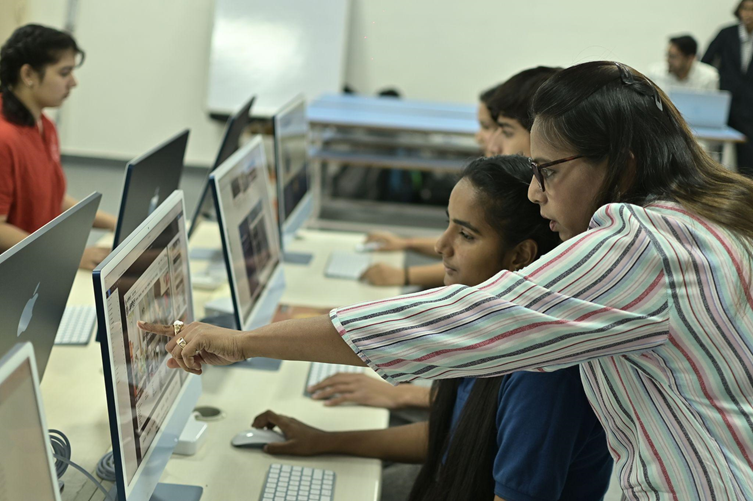
Decoupled MERN Architecture follows the principle of completely separating the frontend from the backend. The React application communicates with Express.js through RESTful APIs or GraphQL, allowing each layer to be developed, deployed, and scaled independently. Poddar International College emphasizes project-based learning and practical software engineering concepts that help students understand modern scalable architectures and API-driven development. Through advanced technology facilities, including an Apple Lab in Jaipur, students gain exposure to cutting-edge development tools and frameworks that prepare them for real-world software engineering challenges.
One of the greatest strengths of Decoupled MERN is its flexibility. A single backend can support multiple client applications, including web, mobile, and desktop platforms, while APIs simplify integration with third-party services. This architecture enables organizations to build highly scalable and maintainable applications. Poddar International College encourages students to explore API-first development, cloud technologies, and modern software ecosystems, equipping them with practical skills aligned with current industry requirements.
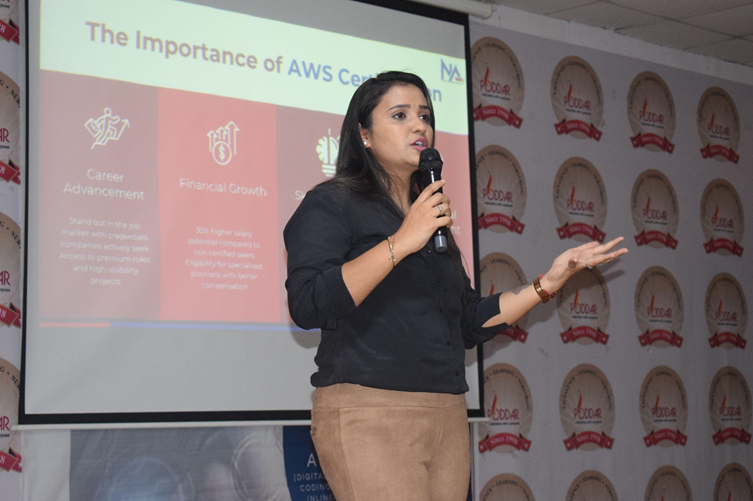
Both Decoupled MERN and Next.js App Router represent powerful approaches to modern web development. While Decoupled MERN offers flexibility through clear separation of responsibilities, Next.js App Router provides an integrated architecture with improved rendering, routing, and performance optimization. Through its MCA course in Jaipur, Poddar International College, Mansarovar, Jaipur, prepares students for careers in full-stack development, Artificial Intelligence, cloud computing, and emerging web technologies. By combining academic excellence with industry-focused training, the institution enables future developers to build scalable, high-performance applications capable of meeting evolving business and user demands.