
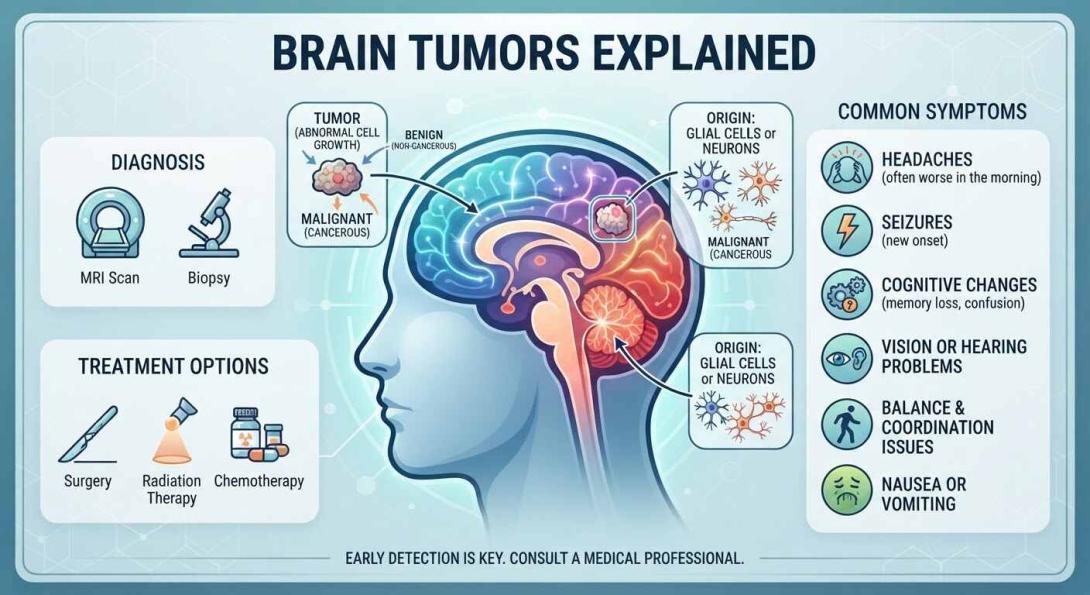
A brain tumor diagnosis can feel overwhelming, whether it involves you or a loved one. The complexity of the human central nervous system means that brain tumors present unique challenges compared to cancers in other parts of the body. Understanding the basics—what brain tumors are, how they are classified, what warning signs to watch for, and how modern medicine treats them—is an essential first step toward navigating a path forward.
What Is a Brain Tumor?
A brain tumor is an abnormal growth or mass of cells within or surrounding the brain. Inside the rigid structure of the skull, any uncontrolled growth can cause significant problems. As a tumor enlarges, it increases pressure inside the cranium (intracranial pressure) and can compress, invade, or damage healthy brain tissue.
When dealing with complex brain or spine conditions, consulting a leading expert like Dr. Simranjeet Singh—widely recognized as a best neurosurgeon in guwahati—ensures that patients receive accurate evaluations and personalized treatment plans.
Primary vs. Secondary Brain Tumors
Brain tumors broadly fall into two main categories based on where they originate:
- Primary Brain Tumors: These originate directly within the brain or its immediate surrounding tissues, such as the meninges (membranes covering the brain), cranial nerves, or pituitary gland. Primary tumors can be benign (non-cancerous) or malignant (cancerous).
- Secondary (Metastatic) Brain Tumors: These occur when cancer elsewhere in the body—most commonly the lungs, breast, colon, kidney, or skin (melanoma)—spreads through the bloodstream to the brain. Metastatic brain tumors are far more common than primary tumors and are always malignant.
Key Types of Primary Brain Tumors
Primary brain tumors are named according to the type of cell from which they develop.
Gliomas
Gliomas account for nearly 30% of all primary brain tumors and 80% of malignant ones. They arise from glial cells, which support and protect neurons. The main sub-types include:
- Astrocytomas: Originating from star-shaped cells called astrocytes. They range from slow-growing (Grade 1) to highly aggressive (Grade 4).
- Glioblastomas (GBM): The most common and aggressive malignant primary brain tumor in adults. Glioblastomas grow rapidly and readily invade surrounding brain tissue.
- Oligodendrogliomas: Arising from oligodendrocytes (cells that insulate nerve fibers), these tend to grow more slowly than astrocytomas.
- Ependymomas: Developing from cells lining the brain’s ventricles and central canal of the spinal cord, often interfering with cerebrospinal fluid (CSF) flow.
Meningiomas
Meningiomas arise from the meninges, the protective membranes wrapping the brain and spinal cord. They represent the most common primary brain tumor in adults. The vast majority (over 80%) are benign and grow slowly, though their size can eventually exert pressure on critical tissue.
Pituitary Adenomas
Located at the base of the brain, the pituitary gland controls hormone production. Adenomas here are almost exclusively benign. However, as they grow, they can disrupt hormone regulation or press against the nearby optic chiasm, causing visual field loss.
Acoustic Neuromas (Schwannomas)
These benign tumors develop on the vestibular nerve, which connects the inner ear to the brain. They cause gradual hearing loss, tinnitus (ringing in the ear), and balance issues. Read more- https://drsimranjeetneurosurgeon.com/brain-tumors-types-grades-symptoms…