
The digital world is constantly changing. It impacts how most people communicate, work, study, and use vital services. Nowadays, people cannot be separated from websites, smartphone applications, and digital platforms. As we continue to develop technology, we face a significant challenge: ensuring accessibility for everyone to interact with the digital world.
Poddar International College supports technology-based education and innovation. It enables learners to recognize the value of inclusive technologies, accessible designs, and human-centric digital solutions. As one of the emerging IT colleges in Jaipur, the institution focuses on developing future-ready professionals who understand the importance of technology that serves diverse communities. Accessible UI/UX prioritizes User Interfaces and User Experiences to bridge the gap in digital accessibility and create technology that can be useful to people of all abilities.
The design of conventional UI/UX focuses on appearance and speed. This often results in a system that is convenient for the average user but may create barriers for people with disabilities. Users of various digital systems can experience frustration due to inaccessibility, especially those with visual, auditory, physical, or cognitive disabilities. Poddar International College encourages students pursuing technology programs such as the BCA course in Jaipur to understand contemporary accessibility principles in UI/UX design and develop solutions that address the needs of diverse users.
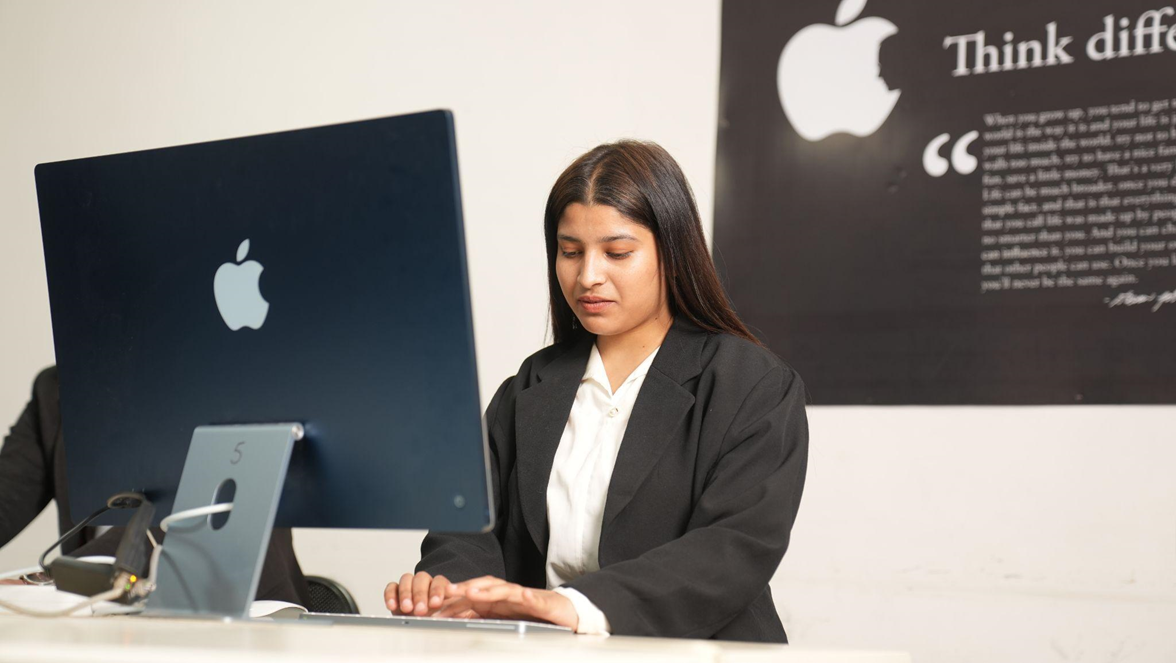
Accessible UI/UX incorporates a wide range of assistive measures for everyone to access a platform seamlessly. Some examples include screen readers, support for keyboard and voice control, options to change text size, simple and well-organized interfaces, captioned content, and high-contrast modes. Poddar International College provides learning opportunities that foster the understanding and application of core skills and knowledge in accessible design and UI/UX. Through advanced learning environments, including facilities like an Apple Lab in Jaipur, students gain practical exposure to modern technologies and understand the intricacies of user-centric digital solutions. This enables users of all abilities to independently access content and online services.
The digital disability divide is the distinction between users who are fully empowered by the availability of online services and users who are not due to inaccessible design. As more services become available online, including banking, education, healthcare, and government services, accessibility is emerging as a critical concern. Poddar International College stimulates students’ understanding of digital inclusion and responsible technology usage to
reduce accessibility gaps in online services. Students from advanced technology programs like the MCA course in Jaipur are encouraged to explore innovative approaches that promote inclusive digital transformation.
Accessible UI/UX design is crucial for creating a fair digital world. When design and technology are used together, the digital divide for people with disabilities can be significantly reduced. With this vision, Poddar International College, situated in Mansarovar, Jaipur, Rajasthan, continues to use technology to strengthen education programs focused on research, innovation, and skill development in emerging fields like Artificial Intelligence, UI/UX design, accessibility technology, and digital commerce transformation.
The future of technology must focus on creating solutions that transcend barriers of ability and actively include everyone. By nurturing skilled professionals through programs in computer applications, design, and emerging technologies, Poddar International College continues its commitment toward building an inclusive and accessible digital future.